
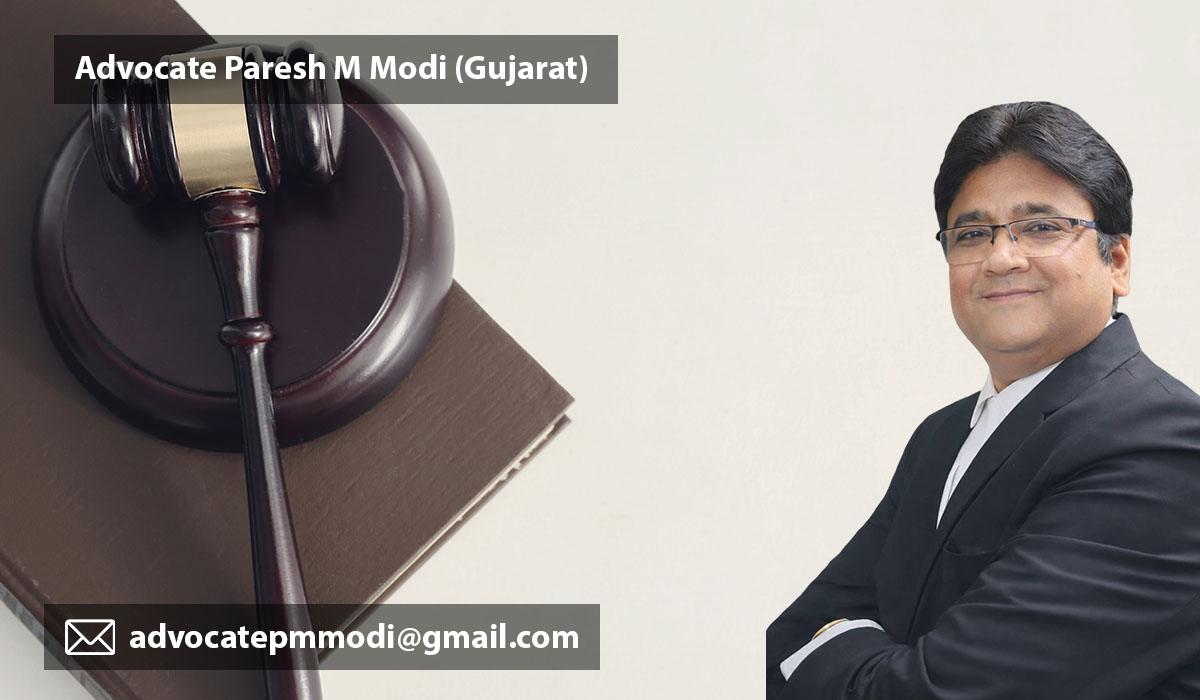
Top Vakil for Cheque Dishonour in Ahmedabad
Cheque Return Cases and the Negotiable Instruments Act: A Focus on Top Advocate Paresh M Modi, Based Ahmedabad Gujarat
In the bustling legal landscape of Ahmedabad, Gujarat, Advocate Paresh M Modi stands out as a prominent expert in handling cheque return cases under the Negotiable Instruments Act, 1881. The Act, a cornerstone of financial law in India, addresses various aspects of negotiable instruments such as promissory notes, bills of exchange, and cheques. Among its most crucial provisions are those pertaining to the dishonor of cheques, commonly referred to as cheque bounce cases.
Overview Process Regarding the cheque Bounce Case and NI Act 1881 Section 138:
A cheque return, or cheque bounce, occurs when a cheque presented for payment is not honored by the bank. This can happen due to insufficient funds, a mismatch of signature, or any other reason that prevents the bank from processing the payment. The consequences of a cheque bounce can be severe, impacting both the drawer and the payee, and often leading to legal disputes.
Under Section 138 of the Negotiable Instruments Act, 1881, the dishonor of a cheque is considered a criminal offense. This section lays down the procedure and penalties for such cases, providing a legal framework to address the issue. To initiate legal action, the payee must issue a demand notice to the drawer within 30 days of receiving the bank’s memo indicating the cheque’s dishonor. If the drawer fails to make the payment within 15 days of receiving the notice, the payee can file a complaint in a magistrate’s court within one month.
Advocate Paresh M Modi, with his extensive experience and in-depth knowledge of the Negotiable Instruments Act, has carved a niche for himself in this specialized field. His practice focuses on providing comprehensive legal services to clients facing cheque bounce issues, ensuring that their rights are protected and that they receive the justice they deserve. He meticulously handles all aspects of such cases, from drafting and issuing the initial demand notice to representing clients in court proceedings.

Strengths of Advocate Paresh M Modi:
One of the key strengths of Advocate Modi is his ability to navigate the complex procedural requirements of Section 138 cases. He understands the importance of timely action and precise documentation, which are critical in these matters. His strategic approach involves gathering substantial evidence, such as bank memos, correspondence between parties, and financial records, to build a strong case for his clients.
Moreover, Advocate Modi is adept at negotiating settlements, a crucial aspect of cheque bounce cases. He recognizes that litigation can be time-consuming and costly, and often advises clients on the benefits of an out-of-court settlement. His negotiation skills have resulted in favorable outcomes for many clients, allowing them to resolve disputes amicably and efficiently.
In Addition:
In addition to his expertise in cheque return cases, Advocate Modi is well-versed in other criminal matters under the Negotiable Instruments Act. He provides legal counsel on issues related to the execution of negotiable instruments, the liability of parties, and the intricacies of endorsement and transfer. His broad understanding of the Act enables him to offer clients holistic legal solutions that address all potential aspects of their cases.
Advocate Paresh M Modi’s reputation as a leading cheque bounce case attorney in Ahmedabad is built on a foundation of trust, dedication, and a proven track record of success. His clients benefit from his personalized approach, where he takes the time to understand their unique situations and crafts tailored legal strategies. His commitment to upholding the principles of justice and fairness has earned him the respect and admiration of both clients and peers in the legal community.
Conclusion :
In conclusion, Advocate Paresh M Modi’s expertise in cheque return cases and criminal matters under the Negotiable Instruments Act makes him a sought-after legal professional in Ahmedabad, Gujarat. His comprehensive legal services, strategic approach, and dedication to client success ensure that those facing cheque bounce issues receive the best possible representation and outcomes.
The process of a cheque bounce case under the Negotiable Instruments Act, 1881 (NI Act) involves several stages, from the initial dishonor of the cheque to the final resolution of the case. Here is a detailed overview of each stage:
Stages of Cheque Dishonour Case
- Dishonor of Cheque
– Event: The payee presents the cheque to the bank, and it is dishonored due to insufficient funds, a stop payment request, or any other reason.
– Action: The bank issues a ‘Cheque Return Memo’ to the payee, stating the reason for dishonor.
- Notice to Drawer
– Event: The payee issues a written notice to the drawer of the cheque.
– Timeline: The notice must be issued within 30 days from the date the cheque was dishonored.
– Content: The notice demands the payment of the cheque amount within 15 days from the date of receipt of the notice.
- Non-Payment by Drawer
– Event: The drawer fails to make the payment within the stipulated 15-day period after receiving the notice.
– Action: The payee has the option to file a complaint under Section 138 of the NI Act.
- Filing of Complaint
– Event: The payee (complainant) files a complaint in the appropriate court.
– Timeline: The complaint must be filed within one month from the expiry of the 15-day period given in the notice.
– Content: The complaint includes details of the transaction, the dishonored cheque, and the steps taken by the complainant.
- Court Proceedings
– Summons to Drawer: The court issues summons to the drawer (accused) to appear before it.
– Plea by Accused: The accused appears in court and is asked to plead guilty or not guilty.
– Evidence Stage:
– Complainant’s Evidence: The complainant presents evidence, including the dishonored cheque, the cheque return memo, the notice issued, and proof of service of notice.
– Cross-Examination: The accused has the right to cross-examine the complainant and their witnesses.
– Accused’s Evidence: The accused may present their defense and produce evidence to support their case.
– Arguments: Both parties present their final arguments to the court.
- Judgment
– Event: The court evaluates the evidence and arguments presented by both parties.
– Outcome: The court may either:
– Convict the accused: If found guilty, the court may impose a fine, imprisonment (up to two years), or both. The court may also direct the accused to pay the cheque amount to the complainant.
– Acquit the accused: If found not guilty, the accused is acquitted of the charges.
- Appeal
– Event: Either party (complainant or accused) may appeal against the judgment.
– Timeline: The appeal must be filed within the prescribed time limit, usually 30 days from the date of the judgment.
– Action: The appellate court re-evaluates the case based on the grounds of appeal and the evidence presented.
Key Points to Note:
– Compounding of Offense: The offense under Section 138 of the NI Act is compoundable, meaning the parties can settle the matter out of court at any stage.
– Jurisdiction: The complaint can be filed in the court within whose jurisdiction the bank branch where the complainant maintains their account is situated.
– Interim Compensation: As per recent amendments, the court can direct the accused to pay interim compensation to the complainant during the pendency of the case.
This structured process ensures that the rights of both the complainant and the accused are protected, and justice is served in cases of cheque dishonor.
High Court Advocate for Cheque Bounce Appeal | Discharge Application | NI Act Case Quashing | Cheque Return Appeal Lawyer in Ahmedabad Gujarat
Advocate Paresh M Modi, based in Ahmedabad, Gujarat, is a renowned legal expert with extensive experience in criminal law, specializing in handling complex cases across multiple judicial forums, including the High Court of Gujarat and Sessions Courts. His dedication, thorough understanding of legal nuances, and strong litigation skills make him a trusted name in the legal fraternity.
Practice Areas
- Anticipatory Bail Applications
Advocate Paresh M. Modi has a proven track record of successfully representing clients in anticipatory bail applications under Section 438 of the Criminal Procedure Code (CrPC). He ensures his clients’ rights are safeguarded by presenting a compelling case that highlights the absence of prima facie evidence, mitigating circumstances, and legal precedents. - Regular Bail Applications
Specializing in regular bail under Section 439 of CrPC, he advocates for clients’ release by focusing on procedural fairness, factual analysis, and ensuring adherence to legal principles. His expertise extends to cases involving white-collar crimes, cyber fraud, financial disputes, and general offenses under the Indian Penal Code (IPC). - Discharge Applications
Advocate Modi is adept at filing discharge applications under Section 227 of CrPC, aiming to release his clients from baseless allegations or charges during the pre-trial stage. His meticulous approach often results in successful outcomes in Sessions Courts. - FIR Quashing Cases
At the High Court of Gujarat, Advocate Modi handles FIR quashing petitions under Section 482 of CrPC, focusing on preventing misuse of the law and ensuring justice. He specializes in cases involving false accusations, abuse of process, and malicious prosecution.
Specialist in Cheque Return Cases – NI Act Section 138
Advocate Paresh M. Modi is a leading name in handling cheque return cases under Section 138 of the Negotiable Instruments Act (NI Act). These cases involve dishonored cheques due to insufficient funds or other reasons. His approach includes:
- Filing and Defending Complaints: He represents both complainants and accused parties in cheque bounce cases at Trial Courts, ensuring the law’s procedural and substantive aspects are addressed.
- Criminal Appeals and Revisions: Advocate Modi handles appeals and revision applications in Sessions Courts and the High Court, challenging or defending judgments passed by lower courts.
- Focus on Resolution: He emphasizes swift and amicable resolution through legal means, whether by securing penalties for the complainant or negotiating settlements.
Contact Information
For legal consultation or representation in matters of Anticipatory bail, Regular bail, Discharge Applications, FIR Quashing, Cheque Return Cases, or Criminal Appeals, connect with Advocate Paresh M. Modi through his official website: www.advocatepmmodi.in.
Here’s a comprehensive list of police stations for each district and major city across Gujarat:
Ahmedabad City Police Stations
- Navrangpura Police Station
- Ellisbridge Police Station
- Shahibaug Police Station
- Maninagar Police Station
- Kagdapith Police Station
- Sarkhej Police Station
- Bapunagar Police Station
- Vejalpur Police Station
- Naranpura Police Station
- Vastrapur Police Station
- Ghatlodia Police Station
- Naroda Police Station
- Ranip Police Station
- Gomtipur Police Station
- Gaekwad Haveli Police Station
- Meghaninagar Police Station
- Amraiwadi Police Station
- Satellite Police Station
- Paldi Police Station
- Aslali Police Station
- Danilimda Police Station
- Ramol Police Station
- Odhav Police Station
- Isanpur Police Station
- Sabarmati Police Station
- Khokhra Police Station
- Sola High Court Police Station
- Bodakdev Police Station
- Chandkheda Police Station
- Motera Police Station
Ahmedabad Rural Police Stations
- Bavla Police Station
- Sanand Police Station
- Dholka Police Station
- Dholera Police Station
- Viramgam Police Station
- Mandal Police Station
- Detroj Police Station
- Ranpur Police Station
- Bagodara Police Station
- Koth Police Station
- Changodar Police Station
- Kheda Police Station
- Bareja Police Station
- Kathlal Police Station
- Mehamdabad Police Station
Practice area of Advocate Paresh M Modi-
Ahmedabad, Adalaj, Adipur, Ahwa, Aithor, Alang, Ambaji, Aambaliyasan, Amod, Amreli, Anand, Ankleshwar, Anjar, Atul, Babra, Bagasara, Balasinor, Banaskantha, Bardoli, Baroda, Bayad, Bavla, Bechraji, Bhachau, Bharuch, Bhavnagar, Bhuj, Bilimora, Borsad, Botad, Chaklasi, Chanasma, Chhota Udepur, Chikhli, Chorvad, Chotila, Dahisara, Dahod, Dahegam, Dakor, Danta, Dang, Dediapada, Deesa, Devbhumi Dwarka, Dhanera, Dhandhuka, Dholera, Dhrangadhra, Dhoraji, Dhrol, Dharampur, Disa, Diu, Dwarka, Fatehganj, Gandhidham, Gandhinagar, Gir Somnath, Ghoghamba, Godhra, Gondal, Gozaria, Halol, Halvad, Hansot, Harij, Himmat Nagar, Idar, Jamjodhpur, Jamnagar, Jasdan, Jetalpur, Jetpur, Jambughoda, Junagadh, Kachchh, Kadi, Kalol, Kanjari, Kanodar, Kankrej, Karjan, Katargam, Keshod, Kheda, Khambhat, Kodinar, Kosamba, Koth, Kutiyana, Lakhtar, Lalpur, Lathi, Limdi, Lunawada, Mahisagar, Mahemdavad, Mahuva, Malpur, Mandvi, Mansa, Manavadar, Mangrol, Matar, Mehsana, Modasa, Morbi, Muli, Mundra, Nadiad, Nakhatrana, Naliya, Narmada, Naroda, Narol, Navsari, Okha, Olpad, Padra, Palanpur, Paliyad, Palitana, Panchmahal, Patan, Petlad, Pipavav, Porbandar, Prantij, Radhanpur, Rajkot, Rajpipla, Ranavav, Ranpur, Sabarkantha, Salaya, Samakhiali, Sanand, Santrampur, Savarkundla, Savli, Sayan, Shahera, Shihor, Sidhpur, Sikka, Sojitra, Songadh, Surat, Surendranagar, Sutrapada, Talaja, Talod, Tapi, Tarapur, Tharad, Thasra, Umreth, Una, Unjha, Upleta, Umergam, Vadnagar, Vadodara, Vaghodia, Vaav, Valsad, Vansda, Vapi, Veraval, Vijapur, Visnagar, Viramgam, Vyara, Wankaner, Zinzuwada,
Legal Words and Definitions
In Ahmedabad
“In Ahmedabad” refers to legal services, representation, and consultancy provided within the jurisdiction of Ahmedabad City and its surrounding areas, including District Courts, Metropolitan Courts, Family Courts, Consumer Forums, Revenue Authorities, and the Gujarat High Court circuit bench. This term highlights the availability of experienced legal assistance for individuals, businesses, and families seeking professional legal support in Ahmedabad.
In Gujarat
“In Gujarat” refers to legal practice, representation, advisory services, and litigation conducted across the entire state of Gujarat. This includes proceedings before all District Courts, Sessions Courts, Family Courts, Revenue Courts, Commercial Courts, Special Act Courts, Tribunals, and the Hon’ble Gujarat High Court. It signifies state-wide legal coverage for clients requiring expert guidance from an experienced advocate in various areas of law.
In India
“In India” refers to legal services, litigation support, consultation, and case handling rendered across any state or union territory within the Republic of India. This includes representation in High Courts of different states, various special tribunals, central authorities, and matters reaching the Hon’ble Supreme Court of India. The term signifies nationwide legal capability for clients needing comprehensive and professional legal assistance across India.
Lawyer
A professional legally qualified to advise clients and represent them before courts or legal authorities.
Advocate
A person enrolled under the Advocates Act, 1961, authorized to practice law and plead cases before courts in India.
Vakil
A traditional Indian term meaning lawyer or advocate who represents parties in legal matters.
Attorney
A legal representative or agent empowered to act for another in legal or business transactions.
Barrister
A lawyer trained in advocacy, typically practicing in higher courts, especially in the UK-style legal system.
Solicitor
A legal practitioner who advises clients, prepares legal documents, and may brief barristers for court appearances.
Lawyers
Lawyers are legal professionals who are qualified to practice law and provide legal assistance. They represent clients in court, prepare legal documents, and offer advice on legal matters. Lawyers specialize in various areas such as criminal law, civil law, property law, family law, and corporate law, ensuring that clients receive the best possible solutions tailored to their legal concerns.
Advocates
Advocates are a subset of lawyers who are specifically authorized to represent clients in court and plead on their behalf. They play a critical role in the judicial system by presenting cases, cross-examining witnesses, and interpreting laws to secure justice for their clients. Advocate Paresh M Modi, based in Ahmedabad, Gujarat, is one such experienced and reputed advocate known for his expertise in criminal, civil, and family matters.
Law Firms
Law firms are professional organizations comprising multiple lawyers and legal consultants who collaborate to provide comprehensive legal services. These firms cater to various legal needs, including litigation, corporate advisory, contract drafting, and dispute resolution. Advocate Paresh M Modi leads a distinguished law firm in Ahmedabad, offering solutions across diverse legal domains with a team of dedicated and experienced advocates.
Law Consultant
A law consultant is an experienced legal professional offering expert guidance on legal matters without necessarily representing clients in court. They assist individuals, businesses, and organizations in navigating complex legal frameworks by providing tailored advice and preventive legal strategies. Advocate Paresh M Modi, known for his profound legal knowledge, offers exceptional consultancy services to ensure clients’ compliance with legal regulations and mitigate risks.
Legal Services
Legal services encompass a wide range of professional assistance provided by lawyers, advocates, and law firms. These include legal advice, drafting legal documents, representing clients in court, negotiating settlements, and ensuring compliance with applicable laws. Advocate Paresh M Modi excels in offering top-notch legal services in Gujarat, addressing criminal cases, property disputes, divorce matters, and more.
Legal Advisor
A legal advisor is a professional who offers strategic legal guidance to individuals or organizations to ensure compliance with laws and regulations. They specialize in interpreting laws, drafting agreements, and providing insights to minimize risks and resolve disputes effectively. Advocate Paresh M Modi serves as a trusted legal advisor, helping clients achieve favorable outcomes in complex legal scenarios.
Law Firm
An organization of lawyers providing legal services, advice, and representation to individuals and businesses.
Vakil
Vakil, a term traditionally used in India, refers to a lawyer or advocate authorized to represent clients in legal proceedings. This term, deeply rooted in Indian history, signifies the trusted legal representatives during the pre-independence era and continues to be used colloquially.
Cheque
A cheque is a negotiable instrument instructing a bank to pay a specific amount from an account holder’s funds to a designated party.
Check
A Check is a term commonly used in American English instead of “Cheque” (which is more common in British English). It refers to a written, dated, and signed instrument that directs a bank to pay a specific sum of money to the bearer or a designated recipient from the drawer’s account. Checks are a common form of non-cash payment and are used for various financial transactions.
Chek
“Chek” is an incorrect or informal spelling of the word “cheque” or “check”. It has no legal recognition in banking or financial documents. Always use “cheque” (British English) or “check” (American English) for valid transactions or legal use.
NI Act
The Negotiable Instruments Act governs financial instruments like cheques, including penalties for dishonor due to insufficient funds.
Cheque Return
Cheque return occurs when a bank declines to honor a cheque, often due to insufficient funds or signature mismatch.
Cheque Dishonour
Cheque dishonor happens when a cheque cannot be processed due to insufficient funds, stop payments, or other technical reasons.
Cheque Bounce
Cheque bounce refers to the non-fulfillment of a cheque’s payment, often leading to legal action under the Negotiable Instruments Act.
Panel
A group of legal professionals appointed by institutions like banks to handle specific cases or provide counsel.
Panel Advocate
A lawyer enlisted by banks, corporations, or courts to handle their legal requirements, such as property disputes or documentation.
Bank
A financial institution that provides loans, mortgages, and other services requiring legal documentation for property transactions.
Near Me
“Near me” refers to finding local legal services or professionals in proximity for convenient access to legal assistance.
Appeal
An appeal is a formal request to a higher court to review and potentially overturn a lower court’s judgment or order.
Revision
Revision involves reviewing and rectifying procedural or jurisdictional errors in a lower court’s judgment or decision.
Best
The “Best” signifies unparalleled quality and performance. It represents the highest standard in a field, offering reliability, trust, and exceptional outcomes, ensuring client satisfaction through consistent excellence.
Top
“Top” defines the pinnacle of achievement or ranking in a profession. It emphasizes leadership, authority, and superior expertise, ensuring outstanding results that surpass expectations.
Expert
An “Expert” is a highly skilled and knowledgeable professional with years of experience in a specific field. They provide dependable advice and solutions tailored to meet complex requirements.
Specialist
A “Specialist” focuses on a specific domain, offering in-depth understanding and dedicated service. Their proficiency ensures precise, efficient, and effective solutions for specialized needs.
Near Me
Near Me is a phrase frequently used in searches to find nearby services, such as lawyers, courts, or legal assistance within a user’s location.
Ahmedabad
Ahmedabad is a prominent city in Gujarat, India, known for its legal hubs, courts, and skilled lawyers handling a wide range of cases.
Gujarat
Gujarat is a state in western India with a robust legal framework and multiple courts addressing various civil, criminal, and corporate cases.
Gandhinagar
Gandhinagar is the capital city of Gujarat, hosting significant legal institutions and administrative offices.
India
India is a country with a vast legal system governed by the Constitution and various laws, hosting multiple courts from district to Supreme Court levels.
Indian Lawyers
Indian lawyers play a crucial role in upholding the Constitution and addressing legal disputes at various judicial levels.
Cheque
A cheque is a negotiable instrument instructing a bank to pay a specific amount from an account holder’s funds to a designated party.
NI Act
The Negotiable Instruments Act governs financial instruments like cheques, including penalties for dishonor due to insufficient funds.
Cheque Return
Cheque return occurs when a bank declines to honor a cheque, often due to insufficient funds or signature mismatch.
Cheque Dishonour
Cheque dishonor happens when a cheque cannot be processed due to insufficient funds, stop payments, or other technical reasons.
Cheque Bounce
Cheque bounce refers to the non-fulfillment of a cheque’s payment, often leading to legal action under the Negotiable Instruments Act.
Specialist
A specialist is someone highly skilled or knowledgeable in a specific area of law, offering expert legal counsel or representation.
NACH (National Automated Clearing House)
NACH is a centralized electronic payment system launched by the National Payments Corporation of India (NPCI). It facilitates high-volume, repetitive transactions such as salary, pension, subsidies, and loan EMI payments. Legally, NACH mandates allow banks or NBFCs to auto-debit EMI amounts directly from a borrower’s account. Disputes related to unauthorized or fraudulent debits can be challenged under the NI Act or Banking Ombudsman Scheme.
Loan
A loan is a financial agreement in which a lender provides money to a borrower with an obligation to repay the amount with interest within a specific period. Loans may be secured (backed by collateral) or unsecured. Legal disputes can arise due to default in repayment, fraudulent documentation, or excessive interest, which may fall under the jurisdiction of Civil Courts or Debt Recovery Tribunals (DRT).
EMI (Equated Monthly Instalment)
EMI refers to the fixed payment amount that a borrower pays each month towards loan repayment. It includes both principal and interest components. Delay or dishonor of EMI payments—especially those collected via ECS or NACH mandates—can lead to legal notices under Section 138 of the Negotiable Instruments Act (NI Act), 1881.
ECS (Electronic Clearing Service)
ECS is an older system for electronic fund transfer, enabling automatic debit or credit of funds. It is often replaced by NACH but still used in some banks. ECS dishonor or technical failure can result in EMI bounce disputes, where lenders can file cheque bounce cases before the Metropolitan Magistrate Court.
Personal Loan
A personal loan is an unsecured financial product that individuals take for personal use such as medical expenses, travel, or education. Legal issues occur when borrowers default on repayments or misuse the loan. NBFCs or banks may initiate recovery through Civil Court suits or arbitration proceedings.
Home Loan
A home loan is a secured loan given for purchasing, constructing, or renovating a house. The property itself acts as collateral. In case of default, lenders can initiate SARFAESI proceedings, issue possession notices, or file cases before Debt Recovery Tribunals. Advocate Paresh M Modi provides legal assistance for home loan disputes, NPA notices, and bank recovery cases.
Business Loan
Business loans are offered to entrepreneurs for business expansion, working capital, or asset purchase. These loans may be secured against business assets or offered as unsecured. Disputes arise regarding non-repayment, hypothecation breaches, or fraud, which can be taken up before Commercial Courts or DRT.
Bank Loan
A bank loan covers all financial lending provided by banks, including vehicle loans, education loans, home loans, and personal loans. Borrower defaults or wrongful debit of EMIs may involve civil or criminal proceedings, and disputes can be handled legally through banking law advocates and court litigation.
Credit Card
A credit card allows consumers to borrow funds within a limit for personal or business purchases. Non-payment of bills or misuse of cards can lead to bank recovery actions, CIBIL score impact, or legal notices under NI Act for bounced payments or fraudulent usage.
Loan App
Loan Apps are digital platforms operated by banks or NBFCs for instant loans. However, many unregistered or unauthorized apps engage in cyber fraud or illegal recovery methods. Victims can file cyber crime complaints or approach advocates specialized in financial and cyber fraud for bank account unfreeze or FIR quashing.
NBFC (Non-Banking Financial Company)
NBFCs are financial institutions that provide loans and credit facilities but do not hold banking licenses. They are regulated under the RBI Act, 1934. Common disputes include unauthorized auto-debits, harassment in recovery, and NACH fraud cases, which are handled before Civil Courts, Consumer Courts, or RBI authorities.
Finance
Finance refers to the management of money, credit, and investments. It includes banking, loans, insurance, and recovery. Legal aspects of finance involve regulatory compliance, recovery litigation, arbitration, and court procedures related to financial fraud or misappropriation.
Court
A Court is a legal authority where justice is administered. It interprets and applies law to resolve disputes between parties. Depending on the nature of the matter (civil, criminal, or commercial), cases are filed in Civil Court, Metropolitan Magistrate Court, Sessions Court, or High Court.
NI Act Court (Negotiable Instruments Act Court)
The NI Act Court specifically handles cases under Section 138 of the Negotiable Instruments Act, which deals with cheque bounce or dishonor of negotiable instruments. Advocate Paresh M Modi represents clients in such matters across Ahmedabad and Gujarat, ensuring effective defense or prosecution.
Metropolitan Magistrate Court
This is the lowest level of Criminal Court in metropolitan areas that handles offenses punishable up to 7 years, including cheque bounce, fraud, and cybercrime. Legal complaints under the NI Act and CrPC (BNSS 2023) are filed before this court.
Sessions Court
A Sessions Court is a higher-level criminal court that hears serious offenses, appeals, and revisions from lower courts. Cases like financial fraud, bank recovery crimes, or cyber offenses are often escalated here from the Magistrate Court.
Tribunal
Tribunals are quasi-judicial bodies established for specialized matters like Debt Recovery Tribunal (DRT), Customs Tribunal, or SEBI Tribunal. They function with judicial powers similar to courts and handle disputes related to finance, loans, or regulatory violations.
Judge
A Judge is a judicial officer who presides over court proceedings, interprets the law, and delivers judgments. Judges ensure that cases—whether under loan disputes, NI Act, or financial fraud—are decided fairly under the provisions of Indian law.
High Court
The High Court is the highest judicial authority in a state and hears appeals, revisions, and writ petitions. Advocate Paresh M Modi regularly represents clients before the Gujarat High Court in matters related to bank loan recovery, cyber fraud, NACH disputes, and NI Act appeals.
Supreme Court
The Supreme Court is the apex judicial authority in India, handling constitutional matters and appeals against High Court judgments.
Ahmedabad, Adalaj, Adipur, Ahwa, Aithor, Alang, Ambaji, Ambaliyasan, Amod, Amreli, Anand, Ankleshwar, Anjar, Aravalli, Atul, Babra, Bagasara, Balasinor, Banaskantha, Bardoli, Baroda (Vadodara), Bayad, Bavla, Bechraji, Bhachau, Bharuch, Bhavnagar, Bhiloda, Bhuj, Bilimora, Borsad, Botad, Chaklasi, Chanasma, Chhota Udepur, Chikhli, Chorvad, Chotila, Chuda, Dabhoi, Dahisara, Dahod, Dahegam, Dahej, Dakor, Danta, Dang, Daskroi, Dediapada, Deesa, Deodar, Detroj-Rampura, Devbhumi Dwarka, Dhanera, Dhandhuka, Dholera, Dholka, Dhari, Dhrangadhra, Dhoraji, Dhrol, Dharampur, Diu, Dwarka, Fatehganj, Gandhidham, Gandhinagar, Gir Somnath, Ghoghamba, Godhra, Gondal, Gozaria, Halol, Halvad, Hansot, Harij, Hazira, Himmatnagar, Idar, Jamjodhpur, Jamnagar, Jasdan, Jetalpur, Jetpur, Jambughoda, Junagadh, Kachchh, Kadi, Kalol, Kamrej, Kanjari, Kanodar, Kankrej, Karjan, Katargam, Keshod, Kheda, Khambhat, Kodinar, Kosamba, Kotda Sangani, Koth, Kutiyana, Lakhtar, Lalpur, Lathi, Limdi, Lodhika, Lunawada, Mahisagar, Mahemdavad, Mahuva, Malpur, Mandvi, Mansa, Manavadar, Mangrol, Matar, Meghraj, Mehsana, Modasa, Morbi, Muli, Mundra, Nadiad, Nakhatrana, Naliya, Narmada, Naroda, Narol, Navsari, Okha, Olpad, Padra, Palanpur, Paliyad, Palitana, Palsana, Panchmahal, Patan, Petlad, Pipavav, Porbandar, Prantij, Radhanpur, Rajkot, Rajpipla, Rajula, Ranavav, Ranpur, Rapar, Sabarkantha, Salaya, Samakhiali, Sanand, Santrampur, Savarkundla, Savli, Sayla, Sayan, Shahera, Shihor, Sidhpur, Sikka, Sinor, Sojitra, Songadh, Surat, Surendranagar, Sutrapada, Talaja, Talod, Tapi, Tarapur, Tharad, Thasra, Upleta, Umreth, Una, Unjha, Umergam, Vadnagar, Vadodara, Vaghodia, Valsad, Vansda, Vapi, Vanthali, Veraval, Vijapur, Visavadar, Visnagar, Viramgam, Vyara, Wankaner, Zinzuwada,
NBFCs (Non-Banking Financial Companies)
Bajaj Finance, Bajaj Finserv, Tata Capital, Tata Motors Finance, Mahindra Finance, Cholamandalam Finance, Shriram Finance, Shriram Transport Finance, HDB Financial Services, HDFC Credila, Aditya Birla Finance, Fullerton India, Indiabulls Consumer Finance, Indiabulls Housing Finance, Hero FinCorp, L&T Finance, IIFL Finance, Muthoot Finance, Manappuram Finance, Capri Global, Magma Fincorp, Kotak Mahindra Prime, Poonawalla Fincorp, InCred Finance, Piramal Capital & Housing Finance,
Banks Handling Payment Recovery & Cheque Bounce Cases (Ahmedabad, Gujarat)
State Bank of India (SBI), Bank of Baroda, HDFC Bank, ICICI Bank, Axis Bank, Kotak Mahindra Bank, IDFC First Bank, IndusInd Bank, Yes Bank, RBL Bank, Federal Bank, Punjab National Bank, Union Bank of India, Canara Bank, Central Bank of India, Indian Bank, Bank of India, UCO Bank, IDBI Bank, AU Small Finance Bank, Jana Small Finance Bank, Fincare Small Finance Bank, Suryoday Small Finance Bank,
Contact Advocate Paresh M Modi – Cheque Bounce Lawyer in Gujarat
If you are facing a cheque bounce problem and require immediate legal assistance, you may consult:
Advocate Paresh M Modi
Office No. C/112, Supath-2 Complex, Opp. Kohinoor Plaza Hotel,
Near Old Wadaj Bus Stand, Ashram Road, Ahmedabad – 380013, Gujarat
📞 Mobile (WhatsApp only 9 AM to 9 PM): +91 9925002031
☎ Office Landline (10:30 AM to 6:30 PM – Working Days): +91-79-48001468
📧 Email: advocatepmmodi@gmail.com
🌐 Website: www.advocatepmmodi.in