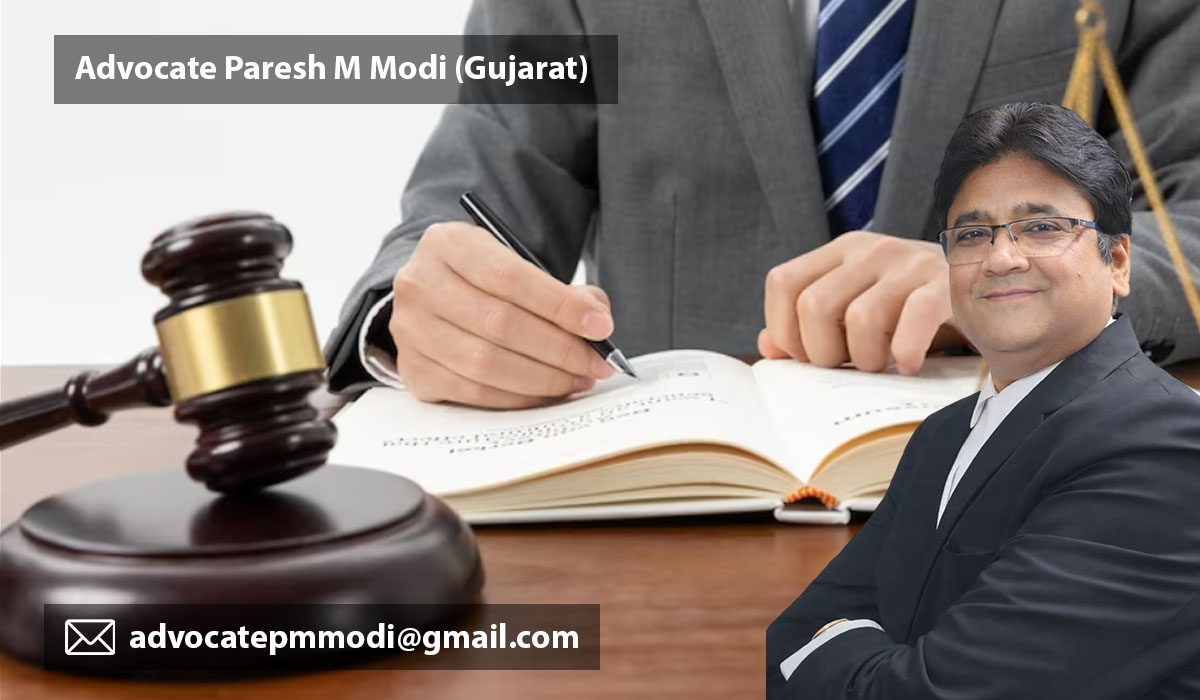
Author: Advocate Paresh M Modi

As a law firm, Advocate Paresh M Modi is having a team of expert Advocates who provide expert advice and guide the clients on the complicated issues of court proceedings in India. Our law firm has been advising clients to adopt a systematic approach as per the provisions of the law and the requirements of the statute. Being the Best Advocate in Ahmedabad, Advocate Paresh M Modi has been serving the clients according to the provisions of law as Advocate Paresh M Modi is an Experienced Lawyer in Gujarat.Paresh M Modi and his associates have been rendering excellent work owing to their experience in Gujarat High Court for more than 7 years together and having established themselves as a seasoned advocate in the High Court of Gujarat by dealing with various matters in a different fields. It has been made possible to see that the client in any corner of the State of Gujarat could get genuine legal advice and the presence of a lawyer on account of the association with Advocates in various cities of the State of Gujarat.


Advocate for Co-operative Housing Society  in Ahmedabad | Paresh M Modi | 9925002031 | Housing Society Disputes Advocate in Gujarat


Co-operative Housing Society related 24 Hot Questions and Answers, which often ask by the Members


Advocate Paresh M Modi, based in Ahmedabad, Gujarat, is renowned as the best lawyer for housing society disputes under the Gujarat Co-operative Housing Societies Act. With extensive expertise, he handles issues like maintenance disputes, transfer fees, election challenges, misuse of funds, and common area rights. Known for his strategic legal approach and in-depth understanding of co-operative housing laws, he provides effective solutions for society committee matters and member grievances. Advocate Paresh M Modi ensures justice for his clients, representing them in various legal forums, including the Co-operative Court and Registrar’s Office, across Gujarat.


1. What are the maintenance charges in a housing society, and how should they be calculated?

Answer:
Maintenance charges are typically calculated based on the square footage of an apartment or equally among members as per the society’s by-laws. Section 79 of the Gujarat Co-operative Housing Societies Act provides guidelines for fixing such charges, including operational expenses, repair funds, and sinking funds. Disputes regarding maintenance charges can be raised before the Registrar of Co-operative Societies or the Consumer Forum.

Gujarati:
હાઉસિંગ સોસાયટીમાં મેન્ટેનન્સ ચાર્જ શું છે અને તે કેવી રીતે ગણવવામાં આવે છે?
જવાબ: મેન્ટેનન્સ ચાર્જ સામાન્ય રીતે એપાર્ટમેન્ટના સ્ક્વેર ફૂટ કે રકમના ભાગે અથવા સોસાયટીના નિયમો મુજબ સભ્યો વચ્ચે સમાન રૂપે વહેંચાય છે. ગુજરાત કૉ-ઑપરેટિવ હાઉસિંગ સોસાયટી અધિનિયમની કલમ 79 મેન્ટેનન્સ ચાર્જના નિર્ધારણ માટે માર્ગદર્શિકા પ્રદાન કરે છે. આ વિવાદો માટે સોસાયટીના રજીસ્ટ્રાર અથવા ગ્રાહક ફોરમમાં અરજી કરી શકાય છે.


2. Who is responsible for lift maintenance in a housing society?

Answer:
Lift maintenance is the responsibility of the housing society under the Gujarat Lifts and Escalators Act, 2000. Charges for maintenance are distributed among members either equally or based on the size of the apartment. Members can file complaints if lifts are not maintained properly, risking safety.

Gujarati:
હાઉસિંગ સોસાયટીમાં લિફ્ટના મેન્ટેનન્સ માટે જવાબદાર કોણ છે?
જવાબ: ગુજરાત લિફ્ટ અને એસ્કેલેટર અધિનિયમ, 2000 અનુસાર લિફ્ટના મેન્ટેનન્સ માટે સોસાયટી જવાબદાર છે. મેન્ટેનન્સ માટેના ચાર્જ સભ્યો વચ્ચે સમાન કે ફ્લેટના કદના આધારે વહેંચાય છે. જો લિફ્ટ સારી રીતે જાળવી રાખવામાં નહીં આવે તો સભ્યો ફરિયાદ કરી શકે છે.


3. Can members use the terrace for personal purposes?

Answer:
The terrace is considered common property under the Gujarat Co-operative Housing Societies Act, Section 24. No member can use it exclusively without society permission. Unauthorized use can be challenged in co-operative courts or with the Registrar.

Gujarati:
મેમ્બર વ્યક્તિગત ઉપયોગ માટે ટેરેસનો ઉપયોગ કરી શકે છે?
જવાબ: ટેરેસ ગુજરાત કો-ઑપરેટિવ હાઉસિંગ સોસાયટીઝ અધિનિયમની કલમ 24 હેઠળ સામૂહિક મિલકત ગણવામાં આવે છે. કોઈપણ સભ્ય તે સોસાયટીની મંજૂરી વિના ખાસ રીતે ઉપયોગ કરી શકતો નથી. અનધિકૃત ઉપયોગ માટે સહકારી અદાલત અથવા રજીસ્ટ્રાર પાસે ફરિયાદ કરી શકાય છે.


4. What is the role of the society chairman, and how can it be challenged?

Answer:
The chairman acts as the head of the society, managing day-to-day affairs as per the society’s by-laws and Section 73 of the Gujarat Co-operative Housing Society Act. If members feel the chairman is acting beyond their powers or unethically, they can approach the Registrar or Co-operative Tribunal under Section 93.

Gujarati:
સોસાયટી ચેરમેનનો શું ભૂમિકા છે અને તે કેવી રીતે પડકારવામાં આવી શકે છે?
જવાબ: ચેરમેન ગુજરાત કો-ઑપરેટિવ હાઉસિંગ સોસાયટીઝ અધિનિયમની કલમ 73 મુજબ દૈનિક કામગીરી સંભાળે છે. જો સભ્યો માને કે ચેરમેન તેમની સત્તાથી આગળ જઈ રહ્યા છે, તો તેઓ કલમ 93 હેઠળ રજીસ્ટ્રાર અથવા સહકારી ટ્રિબ્યુનલનો સંપર્ક કરી શકે છે.


5. What is the procedure to challenge society elections?

Answer:
Under Section 74 of the Gujarat Co-operative Housing Societies Act, members can file a petition to the Registrar or the Co-operative Court if they suspect irregularities in elections. Evidence of malpractice must be submitted along with the complaint.

Gujarati:
સોસાયટીની ચુંટણીઓને પડકારવા માટે પ્રક્રિયા શું છે?
જવાબ: ગુજરાત કો-ઑપરેટિવ હાઉસિંગ સોસાયટીઝ અધિનિયમની કલમ 74 હેઠળ જો ચૂંટણીમાં ગડબડ થાય તો સભ્યો રજીસ્ટ્રાર અથવા સહકારી અદાલતમાં અરજી કરી શકે છે. ફરિયાદ સાથે ગેરરીતિના પુરાવા રજૂ કરવાં આવશ્યક છે.


6. How can transfer fees for property in a housing society be regulated?

Answer:
Transfer fees are regulated under Section 82 of the Gujarat Co-operative Housing Societies Act, which caps the charges a society can levy. Excessive fees are considered illegal and can be contested in the Co-operative Court.

Gujarati:
હાઉસિંગ સોસાયટીમાં મિલકત ટ્રાન્સફર ફી કેવી રીતે નિયમિત કરી શકાય છે?
જવાબ: ગુજરાત કો-ઑપરેટિવ હાઉસિંગ સોસાયટીઝ અધિનિયમની કલમ 82 મુજબ ટ્રાન્સફર ફી પર મર્યાદા રાખવામાં આવી છે. વધારે ફી વસૂલવામાં આવે તો તે ગેરકાયદે ગણાય છે અને તેને સહકારી અદાલતમાં પડકારવામાં આવી શકે છે.


7. Can the society levy additional charges for water usage?

Answer:
Yes, under Section 79 of the Gujarat Co-operative Housing Societies Act, societies can impose additional charges for water if usage exceeds normal limits. Such charges must be approved in the general body meeting and be reasonable. Complaints regarding excessive charges can be addressed to the Registrar.

Gujarati:
સોસાયટી પાણીના ઉપયોગ માટે વધારાના ચાર્જ વસૂલ કરી શકે છે?
જવાબ: હા, ગુજરાત કો-ઑપરેટિવ હાઉસિંગ સોસાયટીઝ અધિનિયમની કલમ 79 હેઠળ, જો પાણીનો ઉપયોગ સામાન્ય મર્યાદા કરતાં વધુ થાય તો સોસાયટી વધારાના ચાર્જ લગાવી શકે છે. આ ચાર્જ સામાન્ય સભામાં મંજૂર થવા જોઈએ અને વ્યાજબી હોવા જોઈએ. વધુ ચાર્જ માટે રજીસ્ટ્રારને ફરિયાદ કરી શકાય છે.


8. What are the rules for using common parking spaces in a housing society?

Answer:
Parking spaces are common areas governed by Section 24 of the Gujarat Co-operative Housing Societies Act. Allocation should be fair, either through a rotation system or as per the society’s by-laws. Unauthorized occupation can be challenged before the Registrar or Co-operative Court.

Gujarati:
હાઉસિંગ સોસાયટીમાં સામાન્ય પાર્કિંગ જગ્યા માટેના નિયમો શું છે?
જવાબ: પાર્કિંગ જગ્યા ગુજરાત કો-ઑપરેટિવ હાઉસિંગ સોસાયટીઝ અધિનિયમની કલમ 24 હેઠળ સામાન્ય વિસ્તાર તરીકે ગણી શકાય છે. આ વિતરણ નિયમિત રીતે અથવા સોસાયટીના નિયમો મુજબ થવું જોઈએ. અનધિકૃત કબજો રજીસ્ટ્રાર અથવા સહકારી અદાલતમાં પડકારવામાં આવી શકે છે.


9. Can a member deny paying maintenance if services are not provided?

Answer:
No, under Section 101 of the Gujarat Co-operative Housing Societies Act, all members must pay maintenance irrespective of service quality. However, members can file a complaint against the managing committee for failure to provide services.

Gujarati:
જો સેવાઓ ન પૂરી પાડવામાં આવે તો સભ્ય મેન્ટેનન્સ ચૂકવવાનું નકારી શકે છે?
જવાબ: નહિ, ગુજરાત કો-ઑપરેટિવ હાઉસિંગ સોસાયટીઝ અધિનિયમની કલમ 101 અનુસાર, સેવાઓની ગુણવત્તા પર આધાર રાખ્યા વગર સભ્યોને મેન્ટેનન્સ ચૂકવવું જરૂરી છે. જોકે, સેવાઓ પૂરી પાડવામાં નિષ્ફળતા માટે મેનેજિંગ કમિટી વિરુદ્ધ ફરિયાદ કરી શકાય છે.


10. How can members demand an audit of society accounts?

Answer:
Under Section 81 of the Gujarat Co-operative Housing Societies Act, members can request an audit by submitting an application signed by at least one-third of the members. The audit must be conducted by a government-authorized auditor.

Gujarati:
સોસાયટીના હિસાબોની ઓડિટ માટે સભ્યો કેવી રીતે માંગણી કરી શકે?
જવાબ: ગુજરાત કો-ઑપરેટિવ હાઉસિંગ સોસાયટીઝ અધિનિયમની કલમ 81 હેઠળ, ઓછામાં ઓછા એક તૃતિય સભ્યોની સહીવાળી અરજી આપીને ઓડિટ માટે માગણી કરી શકાય છે. ઓડિટ સરકાર દ્વારા માન્યતા પ્રાપ્ત ઓડિટર દ્વારા કરવી જોઈએ.


11. What is the process to file a complaint against the society committee?

Answer:
Complaints against the managing committee can be filed under Section 93 of the Gujarat Co-operative Housing Societies Act with the Registrar. If the issue involves criminal misconduct, an FIR can also be lodged.

Gujarati:
સોસાયટી કમિટીની વિરુદ્ધ ફરિયાદ કરવા માટે પ્રક્રિયા શું છે?
જવાબ: ગુજરાત કો-ઑપરેટિવ હાઉસિંગ સોસાયટીઝ અધિનિયમની કલમ 93 હેઠળ મેનેજિંગ કમિટીની વિરુદ્ધ રજીસ્ટ્રાર પાસે ફરિયાદ દાખલ કરી શકાય છે. જો ગુનાહિત કૃત્યનો સમાવેશ થાય છે તો FIR પણ નોંધાવી શકાય છે.


12. Can a society impose restrictions on renting flats to tenants?

Answer:
Societies cannot impose blanket bans on renting flats. However, they can enforce regulations under Section 24 of the Gujarat Co-operative Housing Societies Act and society by-laws. Discriminatory restrictions can be challenged legally.

Gujarati:
સોસાયટી ભાડે ફ્લેટ આપવા પર પ્રતિબંધ મૂકી શકે છે?
જવાબ: સોસાયટી સરવાળી પ્રતિબંધ મૂકી શકતી નથી. જો કે, ગુજરાત કો-ઑપરેટિવ હાઉસિંગ સોસાયટીઝ અધિનિયમની કલમ 24 અને નિયમો હેઠળ નિયમોને અમલમાં મૂકી શકે છે. ભેદભાવપૂર્ણ પ્રતિબંધ કાયદાકીય રીતે પડકારવામાં આવી શકે છે.


13. What are the powers of the Registrar in resolving housing society disputes?

Answer:
The Registrar has wide powers under Section 75 of the Gujarat Co-operative Housing Societies Act to resolve disputes, including ordering audits, dissolving committees, and appointing administrators. Appeals can be made against the Registrar’s decision in Co-operative Appellate Court.

Gujarati:
હાઉસિંગ સોસાયટીના વિવાદ ઉકેલવામાં રજીસ્ટ્રારના સત્તા શું છે?
જવાબ: રજીસ્ટ્રાર પાસે ગુજરાત કો-ઑપરેટિવ હાઉસિંગ સોસાયટીઝ અધિનિયમની કલમ 75 હેઠળ ઓડિટનો આદેશ આપવાનો, કમિટીઓને રદ કરવાનો અને તાત્કાલિક સંચાલકો નિયુક્ત કરવાનો અધિકાર છે. રજીસ્ટ્રારના નિર્ણય વિરુદ્ધ સહકારી અપીલ અદાલતમાં અપીલ કરી શકાય છે.


14. How are disputes about drainage and water leakage resolved?

Answer:
Such disputes are addressed under Section 91 of the Gujarat Co-operative Housing Societies Act. Members can report issues to the society for repairs. If unresolved, complaints can be filed with the Registrar or Consumer Forum.

Gujarati:
ડ્રેનેજ અને પાણી લીકેજ અંગેના વિવાદ કેવી રીતે ઉકેલાય છે?
જવાબ: આ પ્રકારના વિવાદ ગુજરાત કો-ઑપરેટિવ હાઉસિંગ સોસાયટીઝ અધિનિયમની કલમ 91 હેઠળ ઉકેલાય છે. સભ્યો આ સમસ્યાઓ સોસાયટીમાં નોંધાવી શકે છે. જો સમસ્યા ઉકેલાય નહીં, તો રજીસ્ટ્રાર અથવા ગ્રાહક ફોરમમાં ફરિયાદ કરી શકાય છે.


15. Can a member be expelled from the society?

Answer:
Expulsion can only be done under Section 35 of the Gujarat Co-operative Housing Societies Act if the member violates by-laws or commits misconduct. The member must be given a chance to be heard before expulsion.

Gujarati:
સોસાયટીના સભ્યને સોસાયટીમાંથી કાઢી મૂકવામાં આવી શકે છે?
જવાબ: ગુજરાત કો-ઑપરેટિવ હાઉસિંગ સોસાયટીઝ અધિનિયમની કલમ 35 હેઠળ, જો સભ્ય નિયમોનું ઉલ્લંઘન કરે અથવા ગેરવર્તન કરે તો તેને જમણી રીતે કાઢી મૂકવામાં આવી શકે છે. કાઢી મૂકવાના અગાઉ સભ્યને પોતાનું પક્ષ રજૂ કરવાની તક અપાવવી જોઈએ.


16. What is the procedure for transferring a flat to another member?

Answer:
The transfer of a flat in a co-operative housing society is governed by Section 35 of the Gujarat Co-operative Housing Societies Act. The procedure involves:

  1. Submitting a written application to the society.
  2. Paying the prescribed transfer fee (not exceeding the amount fixed by law).
  3. Obtaining a no-objection certificate (NOC) from the society.
  4. Completing the legal formalities, including executing the transfer deed.

Disputes in the process can be resolved through the Registrar.

Gujarati:
ફ્લેટને બીજા સભ્યને ટ્રાન્સફર કરવાની પ્રક્રિયા શું છે?
જવાબ: ગુજરાત કો-ઑપરેટિવ હાઉસિંગ સોસાયટીઝ અધિનિયમની કલમ 35 હેઠળ ફ્લેટ ટ્રાન્સફર થાય છે. પ્રક્રિયા નીચે મુજબ છે:

  1. સોસાયટીમાં લેખિત અરજી઼ આપવી.
  2. નિયત કરેલ ટ્રાન્સફર ફી ચૂકવવી.
  3. સોસાયટીમાંથી એનઓસી મેળવવી.
  4. કાયદેસર ફોર્મલિટીઝ, જેમ કે ટ્રાન્સફર ડીડની રચના પૂર્ણ કરવી.

પ્રક્રિયામાં વિવાદો રજીસ્ટ્રાર દ્વારા ઉકેલાઈ શકે છે.


17. Can society deny transferring a flat to legal heirs?

Answer:
No, under Section 72 of the Gujarat Co-operative Housing Societies Act, society cannot deny the transfer of a flat to legal heirs. The legal heirs must submit proof of succession, such as a succession certificate, and complete necessary formalities.

Gujarati:
સોસાયટી કાયદેસર વારસદારોને ફ્લેટ ટ્રાન્સફર કરવામાં ના પાડી શકે છે?
જવાબ: નહિ, ગુજરાત કો-ઑપરેટિવ હાઉસિંગ સોસાયટીઝ અધિનિયમની કલમ 72 અનુસાર સોસાયટી કાયદેસર વારસદારોને ફ્લેટ ટ્રાન્સફર કરવાથી ના કહી શકતી નથી. વારસદારોને વારસ દાખલાનો પુરાવો, જેમ કે વારસદાખલા પ્રમાણપત્ર રજૂ કરવું અને જરૂરી કાર્યવાહી પૂરી કરવી જોઈએ.


18. How to challenge the election of managing committee members?

Answer:
Under Section 74 of the Gujarat Co-operative Housing Societies Act, elections can be challenged by filing a complaint with the Registrar if:

  1. There are allegations of irregularities in the election process.
  2. Ineligible candidates have been elected.
    The Registrar has the authority to annul such elections and order re-election.

Gujarati:
મેનેજિંગ કમિટીના સભ્યોની ચુંટણીને કેવી રીતે પડકારવી?
જવાબ: ગુજરાત કો-ઑપરેટિવ હાઉસિંગ સોસાયટીઝ અધિનિયમની કલમ 74 હેઠળ, નીચેની પરિસ્થિતિમાં રજીસ્ટ્રાર પાસે ફરિયાદ કરીને ચુંટણીને પડકારી શકાય છે:

  1. ચુંટણી પ્રક્રિયામાં ગડબડીના આક્ષેપ હોય.
  2. અયોગ્ય ઉમેદવારો ચુંટાયેલા હોય.
    રજીસ્ટ્રાર આવી ચુંટણી રદ કરી શકે છે અને નવી ચુંટણીનો આદેશ આપી શકે છે.

19. What are the rules for using a society’s terrace?

Answer:
Terrace usage is considered a common area under Section 24 of the Gujarat Co-operative Housing Societies Act. All members have equal rights to use it. Exclusive usage by a single member requires the consent of the general body and must be recorded in the minutes.

Gujarati:
સોસાયટીના ટેરેસનો ઉપયોગ માટેના નિયમો શું છે?
જવાબ: ગુજરાત કો-ઑપરેટિવ હાઉસિંગ સોસાયટીઝ અધિનિયમની કલમ 24 હેઠળ ટેરેસને સામાન્ય વિસ્તાર ગણવામાં આવે છે. તમામ સભ્યોને તેનો સમાન હક છે. કોઈ એક સભ્ય દ્વારા ખાસ ઉપયોગ માટે સામાન્ય સભાની મંજૂરી જરૂરી છે અને તેને મિનિટમાં નોંધવું જોઈએ.


20. What action can be taken if the managing committee misuses society funds?

Answer:
Misuse of society funds can be reported under Section 83 of the Gujarat Co-operative Housing Societies Act. Members can:

  1. File a written complaint with the Registrar.
  2. Request a forensic audit of the society’s accounts.
  3. If criminal intent is suspected, lodge an FIR with the police.

Gujarati:
જો મેનેજિંગ કમિટી સોસાયટીના નાણાંનો દુરૂપયોગ કરે તો શું કાર્યવાહી કરી શકાય?
જવાબ: ગુજરાત કો-ઑપરેટિવ હાઉસિંગ સોસાયટીઝ અધિનિયમની કલમ 83 હેઠળ નાણાંના દુરૂપયોગ માટે સભ્યો નીચે મુજબ ફરિયાદ કરી શકે છે:

  1. રજીસ્ટ્રાર પાસે લેખિત ફરિયાદ નોંધવી.
  2. સોસાયટીના હિસાબોની ફોરેન્સિક ઓડિટ માગવી.
  3. ગુનાહિત ઇરાદાની શંકા હોય તો પોલીસમાં FIR નોંધવી.

21. Can the managing committee restrict usage of the lift for certain members?

Answer:
No, as per Section 24 of the Gujarat Co-operative Housing Societies Act, lifts are common amenities, and all members must have equal access. Restrictions can be challenged before the Registrar.

Gujarati:
મેનેજિંગ કમિટી લિફ્ટના ઉપયોગ માટે કેટલાક સભ્યો પર પ્રતિબંધ મૂકી શકે છે?
જવાબ: નહિ, ગુજરાત કો-ઑપરેટિવ હાઉસિંગ સોસાયટીઝ અધિનિયમની કલમ 24 હેઠળ લિફ્ટ સામાન્ય સુવિધા છે અને તમામ સભ્યોને સમાન પ્રવેશ હોવો જોઈએ. પ્રતિબંધને રજીસ્ટ્રાર સમક્ષ પડકારવામાં આવી શકે છે.


22. Can society impose high transfer fees?

Answer:
No, under Section 37 of the Gujarat Co-operative Housing Societies Act, transfer fees must not exceed the limits prescribed by the Registrar. Any excessive fees can be challenged before the Co-operative Court.

Gujarati:
સોસાયટી વધુ ટ્રાન્સફર ફી લાદી શકે છે?
જવાબ: નહિ, ગુજરાત કો-ઑપરેટિવ હાઉસિંગ સોસાયટીઝ અધિનિયમની કલમ 37 હેઠળ, ટ્રાન્સફર ફી રજીસ્ટ્રાર દ્વારા નક્કી કરેલી મર્યાદાથી વધુ નહીં હોવી જોઈએ. વધુ ફી માટે સહકારી અદાલતમાં પડકાર નોંધાવી શકાય છે.


23. What is the maximum amount a co-operative housing society can charge as transfer fees under the law in Gujarat?

Answer:
As per the Gujarat Co-operative Societies Rules, 1965, read with relevant provisions of the Gujarat Co-operative Housing Societies Act, the transfer fees cannot exceed ₹50,000, regardless of the market value of the property. This ceiling has been upheld in several judgments, ensuring fairness in the transfer process.

The Registrar can intervene if a society demands higher fees, and members can challenge such charges in the Co-operative Court.
Key judgment: Jayantilal J. Shah v. Co-operative Housing Society (Gujarat High Court), where it was clarified that societies cannot impose arbitrary or excessive transfer fees.

Gujarati:
ગુજરાતમાં કાયદા મુજબ સોસાયટી વધુમાં વધુ કેટલું ટ્રાન્સફર ફી લઈ શકે છે?
જવાબ: ગુજરાત કો-ઑપરેટિવ સોસાયટીઝ રુલ્સ, 1965 અને ગુજરાત કો-ઑપરેટિવ હાઉસિંગ સોસાયટીઝ અધિનિયમ મુજબ ટ્રાન્સફર ફી ₹50,000 થી વધુ નહીં હોઈ શકે, ભલે પ્રોપર્ટીની માર્કેટ કિંમત કેટલી પણ હોય.

આ મર્યાદા અનેક ચુકાદાઓમાં મંજુર કરવામાં આવી છે, જે ટ્રાન્સફર પ્રક્રિયામાં ન્યાયની ખાતરી આપે છે.
મુખ્ય ચુકાદો: જયંતીલાલ જે. શાહ વી. કો-ઑપરેટિવ હાઉસિંગ સોસાયટી (ગુજરાત હાઇકોર્ટ), જેમાં society નો કોઈપણ અનિયમિત કે વધુ ફી લાદવાનો પ્રયાસ અસંમત કરાયો હતો.


24. Can a co-operative society demand additional transfer charges beyond ₹50,000 under any pretext?

Answer:
No, as per the Gujarat Co-operative Societies Act and Rules, society cannot charge any amount beyond the maximum prescribed transfer fees of ₹50,000. Attempts to impose additional charges such as “donation fees,” “special development fees,” or other heads have been deemed illegal in multiple judicial pronouncements.

Key judgments:

  1. Shree Ram Housing Society v. Members (Gujarat High Court): Society was directed to refund excess fees taken under the guise of donations.
  2. Ashwin Housing Co-op Society Case: The court reiterated that no additional fees can be charged beyond the statutory limits.

Members can challenge such charges before the Registrar or Co-operative Court and seek refunds.

Gujarati:
શું સોસાયટી ₹50,000 થી વધુ ફી કોઈપણ રીતે લાદી શકે છે?
જવાબ: નહિ, ગુજરાત કો-ઑપરેટિવ સોસાયટીઝ અધિનિયમ અને નિયમો મુજબ, સોસાયટી ₹50,000 ની મર્યાદાથી વધુ કોઈપણ પ્રકારના ટ્રાન્સફર ચાર્જ લઈ શકતી નથી. “ડોનેશન ફી,” “વિશેષ વિકાસ ફી,” અથવા અન્ય શીર્ષક હેઠળ લીધેલી વધારાની ફી આંશિક રીતે ગેરકાયદે ગણવામાં આવી છે.

મુખ્ય ચુકાદાઓ:

  1. શ્રી રામ હાઉસિંગ સોસાયટી વી. સભ્યો (ગુજરાત હાઇકોર્ટ): સોસાયટીને ડોનેશનના નામે લેવાયેલ વધુ ફી પાછી આપવાનો આદેશ આપવામાં આવ્યો.
  2. અશ્વિન હાઉસિંગ કો-ઓપ સોસાયટી કેસ: અદાલતે પુનરાવર્તન કર્યું કે કાયદાકીય મર્યાદા કરતાં વધુ ફી લાદી શકાય નહીં.

સભ્યો રજીસ્ટ્રાર અથવા સહકારી અદાલત સમક્ષ આવા ચાર્જને પડકારી શકે છે અને રિફંડ માગી શકે છે.


Legal Words and Definitions


Lawyers

Legal professionals providing advice and representation in legal matters.


Advocates

Qualified lawyers authorized to represent clients in court.


Barristers

Specialized lawyers who primarily argue cases in higher courts.


Attorneys

Legal representatives handling client matters in legal and business affairs.


Ahmedabad

A major city in Gujarat, India, known for legal and commercial activities.


Gujarat

A state in India with specific legal frameworks governing various matters.


India

A country with a structured legal system based on statutory and case laws.


Society

An organized group of individuals with legal recognition and regulations.


Housing

Residential property-related legal matters, including ownership and tenancy.


Co-operative

A legally registered entity for mutual benefits, often in housing or businesses.


Disputes

Legal conflicts requiring resolution through litigation or settlement.


Matters

Legal issues requiring attention, representation, or adjudication.


Litigations

Formal legal proceedings in courts regarding disputes.


Near Me

A term used to find legal services within proximity, such as in Ahmedabad.


Near

A term indicating closeness to a location, often used in legal searches.


Housing Society

A legally registered residential community governed by cooperative laws.


Chairman

The elected head of a housing society or legal committee.


Secretary

The official responsible for maintaining records in a legal or housing body.


Committee

A governing body managing legal and administrative affairs of an entity.


Top

A term denoting a highly skilled or reputed professional in a legal field.


Best

An indication of superior expertise and success in legal practice.


Expert

A professional with in-depth legal knowledge in a specific area.


Specialist

A lawyer focused on a particular branch of law with extensive experience.


Advocate Paresh M Modi, based in Ahmedabad, Gujarat, is renowned as the best lawyer for housing society disputes under the Gujarat Co-operative Housing Societies Act. With extensive expertise, he handles issues like maintenance disputes, transfer fees, election challenges, misuse of funds, and common area rights. Known for his strategic legal approach and in-depth understanding of co-operative housing laws, he provides effective solutions for society committee matters and member grievances. Advocate Paresh M Modi ensures justice for his clients, representing them in various legal forums, including the Co-operative Court and Registrar’s Office, across Gujarat. Contact for expert legal guidance.


List of districts in Gujarat, where Advocate Modi visit for the Court Cases:

Ahmedabad, Amreli, Anand, Banaskantha, Bharuch, Bhavnagar, Botad, Dahod, Dang, Devbhumi Dwarka, Gandhinagar, Jamnagar, Junagadh, Kachchh, Kutch, Kheda, Mahisagar, Mehsana, Morbi, Narmada, Navsari, Panchmahal, Patan, Porbandar, Rajkot, Sabarkantha, Surat, Surendranagar, Tapi, Valsad, Vadodara

The name of the main cities of Gujarat, where Advocate Modi provide the legal services:

Ahmedabad, Surat, Vadodara, Rajkot, Bhavnagar, Jamnagar, Gandhinagar, Junagadh


Contact Advocate Paresh M Modi

Mobile: +91 9925002031 (Only WhatsApp sms – Timing 9 am to 9 pm)
Office Landline: +91-79-48001468 (For  Appointment Only – Timing 10.30 am to 6.30 pm – On Working Days)
Email: advocatepmmodi@gmail.com
Website: www.advocatepmmodi.in
Office Address: Office No. C/112, Supath-2 Complex, Opp. Kohinoor Plaza Hotel, Near Old Wadaj Bus Stand, Ashram Road, Ahmedabad – 380013, Gujarat, India.


Civil Lawyer in Ahmedabad | Paresh M Modi | 9925002031


Gujarat Co-Operative Housing Society Disputes Lawyers

Society Maintenance Disputes Lawyer in Ahmedabad Gujarat

Housing society and Satyagrah Chhavani Judgement in year 2013, Advocate Co-operative Housing Society

Categories Criminal Cases

HUF Bank Account’s Law in India | Advocate Paresh M Modi | 9925002031 | Gujarat

HUF Bank Account’s Law in India | Advocate Paresh M Modi | 9925002031 | Gujarat


HUF Bank Accounts in Joint Mode – Detailed Explanation

In India, banking regulations and laws provide specific guidelines for opening and operating a Hindu Undivided Family (HUF) bank account. The rules governing HUF accounts ensure clarity on the roles of the Karta (the head of the HUF) and the co-parceners (members of the HUF). Below is a detailed analysis of whether an HUF bank account can be opened in joint mode with the Karta acting as an individual, supported by laws, regulations, penalties, and relevant judgments.


What is an HUF Bank Account?

A Hindu Undivided Family (HUF) is a unique entity recognized under the Hindu law. It is not a separate legal person but a family unit treated as a distinct tax entity under the Income Tax Act, 1961. The Karta, as the family head, is responsible for managing the HUF’s financial affairs, including the bank account.

HUF accounts are primarily opened for transactions related to the HUF’s income, assets, and liabilities. The key parties in an HUF are:

  1. Karta – The eldest male or female member managing the HUF.
  2. Co-parceners – Family members entitled to a share in the HUF property.

RBI Guidelines on HUF Bank Accounts

As per the Reserve Bank of India (RBI) and banking norms, HUF accounts cannot be opened in the name of an individual. The account must be in the name of the HUF, and the Karta operates the account on behalf of the HUF. The Karta cannot use the HUF account for personal or individual transactions.

Can the Karta Join as an Individual?

No, an HUF bank account cannot operate in a joint mode where the Karta joins as an individual. RBI and banking laws are clear that:

  1. The account belongs to the HUF, not the individual Karta.
  2. Mixing personal transactions of the Karta with HUF accounts violates banking regulations and tax laws.

Relevant Laws and Acts

  1. Income Tax Act, 1961
    • Section 2(31): Recognizes HUF as a separate entity for tax purposes.
    • Any individual transactions in an HUF account may lead to tax violations.
  2. Banking Regulation Act, 1949
    • Defines the operational scope for bank accounts and adherence to RBI rules.
  3. Hindu Succession Act, 1956
    • Establishes the framework for HUF rights and Karta’s responsibilities.

Penalties for Violations

If the Karta misuses the HUF account for personal purposes or violates banking rules:

  1. The Income Tax Department may levy penalties under Section 271 of the Income Tax Act.
  2. The bank may suspend the account for non-compliance with the Banking Regulation Act.
  3. Legal disputes among HUF members may arise, leading to civil cases.

Relevant Judgments

  1. Surjit Lal Chhabra v. CIT (1975) – Clarified that HUF property and individual property must remain distinct for tax purposes.
  2. CIT v. Gomedalli Lakshminarayan (1935) – Reiterated the responsibilities of the Karta in managing HUF finances.
  3. Gowli Buddanna v. CIT (1966) – Highlighted the HUF’s distinct identity from individual members.

Conclusion

HUF bank accounts must strictly adhere to RBI and banking norms. The Karta, while managing the account, cannot act in a joint mode with an individual capacity. Compliance with legal provisions ensures smooth operations and avoids penalties or legal disputes. Advocate Paresh M Modi provides expert legal assistance on HUF matters, ensuring clients understand and comply with these regulations.


Gujarati Translation 


HUF બેંક ખાતાનો કાયદો | એડવોકેટ પરેશ એમ મોદી | 9925002031


HUF બેંક ખાતું જોડાણ મોડમાં ખોલવા અંગે વિસ્તૃત માહિતી

હિન્દુ અનડિવાઇડેડ ફેમિલી (HUF) એ ખાસ પ્રકારની ગઠિત સત્તા છે, જે હિન્દુ કાયદા હેઠળ માન્ય છે અને જે આયકર કાયદો, 1961 હેઠળ અલગ કરલાયક સત્તા તરીકે ઓળખાય છે. HUFના કાયદા અને બેન્કિંગ નિયમો ચોક્કસ પ્રકારની માર્ગદર્શિકા પ્રદાન કરે છે.


HUF ખાતાનું કાર્ય અને માળખું

HUF બેંક ખાતું ખાસ HUFની આવક, સંપત્તિ અને ફરજો માટે ખોલવામાં આવે છે. તેમાં બે મુખ્ય પક્ષો હોય છે:

  1. કર્તા – HUFનું વડપણ કરનાર છે.
  2. સહભાગી સભ્યો (કોપાર્શનર્સ) – જે HUFની સંપત્તિમાં હક્કદાર હોય છે.

કર્તા અને વ્યક્તિગત જોડાણ

બેંકિંગ નિયમો અનુસાર, HUF ખાતું કર્તાના વ્યક્તિગત નામે અથવા જોડાણ મોડમાં ખોલી શકાતું નથી. આ રીતે કામગીરી કરવી બેંકિંગ નિયમો અને કરવેરાના નિયમોનું ઉલ્લંઘન ગણાય છે.


સંબંધિત કાયદાઓ

  1. આયકર કાયદો, 1961
    • કલમ 2(31): HUFને અલગ કરદાતા એન્ટિટી તરીકે ઓળખે છે.
    • વ્યક્તિગત વ્યવહારો HUF ખાતામાં તર્કસંગત નથી.
  2. બેંકિંગ નિયમન અધિનિયમ, 1949
    • બેંક ખાતા માટેના નિયમો સ્પષ્ટ કરે છે.

દંડ અને શિસ્તનો ભંગ

  • આયકર વિભાગ હેઠળ દંડ: HUF ખાતાનો વ્યકિતગત ઉપયોગ કરવાથી દંડ લાગુ પડી શકે છે.
  • બેંક દ્વારા પગલાં: ખાતું સ્થગિત થઈ શકે છે.
  • વિવાદ: સભ્યો વચ્ચે કાનૂની વિવાદ થઈ શકે છે.

નિષ્કર્ષ

HUF બેંક ખાતું કાયદાઓ અને નિયમો મુજબ જ ખોલવુ અને ચલાવવુ જોઈએ. જો નિયમોનું ઉલ્લંઘન થાય છે તો તેનાથી આર્થિક નુકસાન તેમજ કાયદાકીય મુશ્કેલી થવાની શક્યતા છે. એડવોકેટ પરેશ એમ મોદી, જે હિન્દુ કાયદાઓ અને બેન્કિંગ કેસોમાં નિષ્ણાત છે, તેઓ આ પ્રકારના કેસ માટે માર્ગદર્શન આપે છે.


Feel free to contact Advocate Paresh M Modi for expert advice on HUF and banking matters.


Contact Advocate Paresh M Modi

Mobile: +91 9925002031 (Only WhatsApp sms – Timing 9 am to 9 pm)
Office Landline: +91-79-48001468 (For  Appointment Only – Timing 10.30 am to 6.30 pm – On Working Days)
Email: advocatepmmodi@gmail.com
Website: www.advocatepmmodi.in
Office Address: Office No. C/112, Supath-2 Complex, Opp. Kohinoor Plaza Hotel, Near Old Wadaj Bus Stand, Ashram Road, Ahmedabad – 380013, Gujarat, India.

Categories Criminal Cases

Debit Note under GST Act | Advocate Paresh M Modi | 9925002031 | Ahmedabad | Gujarat

Debit Note under GST Act | Advocate Paresh M Modi | 9925002031


Debit Note under GST

A debit note is a critical document issued under the GST regime, used for adjusting taxable values or correcting errors in the original invoice. Advocate Paresh M Modi, a top GST case lawyer based in Ahmedabad, Gujarat, provides expert legal advice and services related to GST disputes, including matters involving debit notes.


Key Points about Debit Note under GST:

  1. Purpose of a Debit Note:
    • To adjust the taxable value or GST amount when the supplier has undercharged in the original invoice.
    • To address situations where additional goods or services are supplied or prices are revised.
  2. GST Compliance for Debit Notes:
    • The debit note must include the additional taxable value or GST amount to be adjusted.
    • It must be declared in the supplier’s GSTR-1 return for the applicable month.
    • The recipient can claim Input Tax Credit (ITC) based on the debit note.
  3. Contents of a Debit Note:
    As per Rule 53 of the CGST Rules, 2017, the debit note must include:

    • Supplier and recipient’s details (name, address, GSTIN).
    • Serial number, date, and reference to the original invoice.
    • Adjusted taxable value, GST rate, and tax amount.
  4. Time Limit for Issuing Debit Notes:
    There is no time limit for issuing debit notes under GST, but they must be reported in the GST returns for the relevant tax period.

Advocate Paresh M Modi assists clients with all GST-related matters, ensuring compliance and effective resolution of disputes involving debit notes.


Contact Advocate Paresh M Modi:


Gujarati Translation


જીએસટી ના કાયદા હેઠળ ડેબિટ નોટ વિશે એડવોકેટ પરેશ એમ મોદી 9925002031 ગુજરાત


જીએસટી ના કાયદા હેઠળ ડેબિટ નોટ

ડેબિટ નોટ જીએસટી કાનૂન હેઠળ એક મહત્વપૂર્ણ દસ્તાવેજ છે, જેનો ઉપયોગ મૂળ ઇનવોઇસમાં કરેલ ચૂકવણાંની સમાયોજિત માવજત કરવા અથવા ભૂલો સુધારવા માટે થાય છે. અમદાવાદ, ગુજરાતના જાણીતા જીએસટી કેસ વકીલ એડવોકેટ પરેશ એમ મોદી ડેબિટ નોટ સાથે સંબંધિત તમામ વિવાદોમાં નિષ્ણાત સલાહ અને સેવા પ્રદાન કરે છે.


જીએસટી હેઠળ ડેબિટ નોટ અંગે મુખ્ય મુદ્દાઓ:

  1. ડેબિટ નોટનો હેતુ:
    • ડેબિટ નોટ તે વખતે બહાર પાડવામાં આવે છે જ્યારે સપ્લાયર મૂળ ઇનવોઇસમાં ટેક્સિબલ વેલ્યુ અથવા જીએસટી રકમ ઓછી ચાર્જ કરે છે.
    • વધુ માલ અથવા સેવાઓની સપ્લાય અથવા કિંમતોમાં ફેરફાર થાય ત્યારે પણ ડેબિટ નોટ બહાર પાડવામાં આવે છે.
  2. જીએસટી કાનૂની પાલના:
    • ડેબિટ નોટમાં વધારાના ટેક્સિબલ વેલ્યુ અથવા જીએસટી રકમ દર્શાવવી જરૂરી છે.
    • સપ્લાયરના GSTR-1 રિટર્નમાં તે સ્પષ્ટ રીતે જાહેર કરવું આવશ્યક છે.
    • પ્રાપક ડેબિટ નોટના આધાર પર ઇનપુટ ટેક્સ ક્રેડિટ (ITC) મેળવી શકે છે.
  3. ડેબિટ નોટનું સામગ્રી:
    CGST નિયમ 53, 2017 અનુસાર, ડેબિટ નોટમાં નીચેની માહિતી હોવી જરૂરી છે:

    • સપ્લાયર અને પ્રાપકના નામ, સરનામું અને જીએસટીઈન.
    • ડેબિટ નોટનું સિરિયલ નંબર, તારીખ, અને મૂળ ઇનવોઇસનો સંદર્ભ.
    • સમાયોજિત ટેક્સિબલ વેલ્યુ, જીએસટી દર અને ટેક્સ રકમ.
  4. ડેબિટ નોટ ઇશ્યૂ કરવાના સમયમર્યાદા:
    ડેબિટ નોટ માટે કોઈ સમય મર્યાદા નથી, પરંતુ તે સંબંધિત કરકાળાના જીએસટી રિટર્નમાં રિપોર્ટ કરવું આવશ્યક છે.

એડવોકેટ પરેશ એમ મોદી ડેબિટ નોટ સાથે સંબંધિત તમામ જીએસટી મુદ્દાઓમાં વ્યાવસાયિક માર્ગદર્શન અને વિવાદ નિવારણ સેવા પ્રદાન કરે છે.


Contact Advocate Paresh M Modi

Mobile: +91 9925002031 (Only WhatsApp sms – Timing 9 am to 9 pm)
Office Landline: +91-79-48001468 (For  Appointment Only – Timing 10.30 am to 6.30 pm – On Working Days)
Email: advocatepmmodi@gmail.com
Website: www.advocatepmmodi.in
Office Address: Office No. C/112, Supath-2 Complex, Opp. Kohinoor Plaza Hotel, Near Old Wadaj Bus Stand, Ashram Road, Ahmedabad – 380013, Gujarat, India.


Lawyer In Ahmedabad | 09925002031


Categories Advocate

પોલીસ સ્ટેશનમાં વિડિયો રેકોર્ડિંગ કરવુ ગેરકાયદેસર નથી | Advocate Paresh M Modi | 9925002031

જનતા દ્વારા પોલીસ સ્ટેશનમાં વિડીયો રેકોર્ડીગ અંગેનો કાયદો | Advocate Paresh M Modi | 9925002031


જનતા દ્વારા પોલીસ સ્ટેશનમાં વિડિઓ રેકોર્ડિંગ કરવા અંગેના કાયદાકીય પાસા

ભારતમાં પોલીસ સ્ટેશનમાં વિડિઓ રેકોર્ડિંગ કરવાની કાયદેસરતાનું નિર્ભરતા તેનો ઉદેશ્ય, પરિસ્થિતિઓ, અને કાયદાકીય જોગવાઈઓ પર છે, જેમ કે ગોપનીયતા, પુરાવાની સ્વીકાર્યતા અને જવાબદારીના સિદ્ધાંતો. નીચે આપેલું વિસ્તૃત અને કાયદાસંગત સ્પષ્ટીકરણ આ વિષયને સમજાવવામાં મદદરૂપ થશે.


પોલીસ સ્ટેશનમાં જનતા દ્વારા વિડિઓ રેકોર્ડિંગ ગેરકાનૂની નથી – બોમ્બે હાઈકોર્ટ

બોમ્બે હાઇકોર્ટે ચુકાદો આપ્યો છે કે પોલીસ સ્ટેશનમાં વિડિઓ રેકોર્ડિંગ કરવું ગેરકાનૂની નથી, કારણ કે પોલીસ સ્ટેશનને “પ્રતિબંધિત સ્થાન” તરીકે માન્યતા નથી મળી, જે સત્તાવાર ગુપ્તચર અધિનિયમ, 1923 હેઠળ આવતી નથી. આ મહત્વપૂર્ણ ચુકાદામાં, કોર્ટે સેકશન 3 હેઠળ દાખલ એફઆઈઆરો રદ કરી છે, જે લોકોને પોલીસ સ્ટેશનની અંદર ચર્ચાઓનું વિડિઓ રેકોર્ડિંગ કરવા બદલ આરોપ લગાવવામાં આવી હતી.

કોર્ટ દ્વારા સ્પષ્ટ કરવામાં આવ્યું છે કે સત્તાવાર ગુપ્તચર અધિનિયમના સેકશન 2(8) હેઠળ પરિભાષિત “પ્રતિબંધિત સ્થાન”માં પોલીસ સ્ટેશનનો સમાવેશ થતો નથી. કોર્ટના મતે, આ પ્રવધિનો ગેરવાપર કરવાનો પ્રયાસ કરવો કાયદાના સિદ્ધાંતોના ઉલ્લંઘન સમાન છે અને આવા કિસ્સાઓ ઝીણી તપાસ વિના દાખલ કરવાથી લોકોને ન્યાય પ્રાપ્ત કરવામાં મુશ્કેલી થાય છે.

આ ચુકાદો પોલીસ સ્ટેશનમાં પારદર્શકતા અને જવાબદારી સુનિશ્ચિત કરવા માટે જનતાના અધિકારોનું રક્ષણ કરે છે અને કાયદાના યોગ્ય ઉપયોગ માટે ચેતવણી આપે છે.

પોલીસ સ્ટેશનમાં જનતા દ્વારા વિડિઓ રેકોર્ડિંગ ગેરકાનૂની નથી હોવાના કેસમાં બોમ્બે હાઇકોર્ટની નાગપુર બેંચે આ ચુકાદો જુલાઈ 2022માં આપ્યો હતો. આ કેસમાં અરજદાર રવિન્દ્ર ઉપાધ્યાય વિરુદ્ધ સત્તાવાર ગુપ્તચર અધિનિયમ, 1923 હેઠળ દાખલ એફઆઈઆરને રદ કરવામાં આવી હતી.

જસ્ટિસ મનીષ પીટલે અને વલ્મિકી મેનેજેસની બેંચે નિણય આપ્યો કે આ અધિનિયમના સેકશન 2(8) મુજબ “પ્રતિબંધિત સ્થાન”માં પોલીસ સ્ટેશનનો સમાવેશ થતો નથી, અને આ કારણે પોલીસ સ્ટેશનમાં વિડિઓ રેકોર્ડિંગ કરવા માટે ગુનાની કલમ લાગુ નથી થાય​, તમને જો આ ચુકાદાનો સત્તાવાર રિફરન્સ કે વિવરણ જોઈએ હોય, તો તમે SCC Online જેવી લીગલ ડેટાબેઝ અથવા બોમ્બે હાઇકોર્ટની વેબસાઇટ પરથી માહિતી મેળવી શકો છો


પોલીસ સ્ટેશનમાં વિડિઓ રેકોર્ડિંગ અંગે કાયદાકીય સ્થિતિ

  1. સામાન્ય રીતે પ્રતિબંધ નથી, પરંતુ શરતસર ઉપયોગ જરૂરી:
    • ભારતના બંધારણ અને વિવિધ કાયદાઓ પોલીસ સ્ટેશનમાં વિડિઓ રેકોર્ડિંગ પર સીધો પ્રતિબંધ મૂકતા નથી. જોકે, તે બંધારણમાં નક્કી કરાયેલા મૂળભૂત હકો અને કાયદાઓ સાથે સુસંગત હોવું જોઈએ.
  2. જવાબદારી અને પારદર્શકતાનું અધિકાર:
    • ભારતના સુપ્રીમ કોર્ટએ પોલીસ તંત્રમાં જવાબદારી અને પારદર્શકતાના મહત્વ પર ભાર મૂક્યો છે.
    • જો રેકોર્ડિંગ કાયદાકીય નોર્મ્સનું પાલન કરે છે, તો તે જવાબદારીમાં વધારો કરી શકે છે.
  3. ગોપનીયતાનો હક અને જાહેર જવાબદારી વચ્ચે સંતુલન:
    • બંધારણના કલમ 21 હેઠળ માન્ય ગોપનીયતાનો હક અને જાહેર હિત માટે જવાબદારી વચ્ચે સંતુલન રાખવું આવશ્યક છે.
    • પોલીસ અધિકારીઓ અથવા અન્ય વ્યકિતઓના ગોપનીયતાનો ભંગ કર્યા વિના, ન્યાયસંગત હિત માટે રેકોર્ડિંગ કરવું કાયદેસર હોઈ શકે છે.

લાગુ પડતા કાયદા અને જોગવાઈઓ

  1. ફૌજદારી પ્રક્રિયા સંહિતા (CrPC), 1973:
    • સેક્શન 161 (3): તપાસ દરમિયાન પોલીસ દ્વારા કરાયેલા નિવેદનો રેકોર્ડ થઈ શકે છે, પરંતુ રેકોર્ડિંગના મોડલ વિશે કાયદા સ્પષ્ટ નથી (લેખિત, ઑડિયો અથવા વિડિઓ).
    • સેક્શન 164 (5A): ગંભીર ગુનાઓમાં નિમણૂક કરેલ ન્યાયાધિશની દેખરેખ હેઠળ વિડિઓ રેકોર્ડિંગ કાયદેસર છે.
  2. ભારતીય પુરાવા અધિનિયમ, 1872:
    • સેક્શન 65 B: જો વિડિઓ રેકોર્ડિંગનું પ્રમાણીકરણ યોગ્ય રીતે કરવામાં આવ્યું હોય, તો તેને ઇલેક્ટ્રોનિક પુરાવા તરીકે સ્વીકારવામાં આવી શકે છે.
    • સેક્શન 27: જો કોઈ નિવેદનથી પુરાવાના તથ્ય પ્રસ્થાપિત થાય, તો તે કાયદેસર હોય તો સ્વીકાર્ય બની શકે છે.
  3. ભારતીય દંડ સંહિતા (IPC), 1860:
    • સેક્શન 353: મંજૂરી વિના રેકોર્ડિંગ અને પોલીસ કર્મચારીના કાર્યમાં અવરોધ પૂરાં પાડવું કાયદેસર ગેરકાનૂની છે.
  4. માહિતી ટેક્નોલોજી (IT) અધિનિયમ, 2000:
    • સેક્શન 69: જો રેકોર્ડિંગ ડેટા પ્રાઇવસી અને સુરક્ષાને ભંગ કરે છે, તો તે આ અધિનિયમના ભંગમાં આવે છે.
  5. પોલીસ અધિનિયમ, 1861 અને સુધારાઓ:
    • આ અધિનિયમ વિડીયો રેકોર્ડિંગને સીધા ધ્યાનમાં લેતો નથી, પણ ગુજરાતમાં કરવામાં આવેલા સુધારા અનુસાર પોલીસ સ્ટેશનમાં CCTV કેમેરાની જોગવાઈઓ કરવામાં આવી છે.

વિડિઓ રેકોર્ડિંગ માટે મહત્વપૂર્ણ ચુકાદાઓ

  1. શફી મહંમદ વી. હિમાચલ પ્રદેશ રાજ્ય, (2018) 5 SCC 311:
    • સુપ્રીમ કોર્ટએ પોલીસ સ્ટેશનોમાં CCTV કેમેરા લગાવવાના આદેશ આપ્યા હતા, જે જણાવે છે કે જવાબદારી માટે વિડિયો રેકોર્ડિંગ મહત્વપૂર્ણ છે.
  2. પરમવીર સિંહ સૈની વી. બલજીત સિંહ, (2020) 9 SCC 563:
    • આ ચુકાદામાં સુપ્રીમ કોર્ટએ સમગ્ર ભારતમાં દરેક પોલીસ સ્ટેશનમાં CCTV કેમેરા સ્થાપિત કરવાનો આદેશ આપ્યો.
  3. D.K. બાસુ વી. પશ્ચિમ બંગાળ રાજ્ય, AIR 1997 SC 610:
    • આ ચુકાદામાં નક્કી કરાયું કે પોલીસ કસ્ટડીમાં લેવાયેલા લોકોના હકો માટે યોગ્ય પ્રણાલીઓનો અમલ ફરજિયાત છે.

વિડિઓ રેકોર્ડિંગ ક્યારે કાયદેસર છે?

  1. મંજૂરી સાથે:
    • પોલીસ અધિકારીઓ અથવા અન્ય લોકો સાથેની કોઈપણ વિધિવત વિડીયો રેકોર્ડિંગ માટે મંજૂરી લેવી જરૂરી છે.
  2. અધિકૃત ઉદ્દેશ્ય માટે:
    • કાયદાકીય કારણોસર અથવા પુરાવાના હેતુ માટે રેકોર્ડિંગ કરવું કાયદેસર છે.
  3. CCTV મોનિટરિંગ:
    • સુપ્રીમ કોર્ટના આદેશ મુજબ CCTV ફૂટેજ સંપૂર્ણપણે કાયદેસર છે.

સંપત્તિ માટે સૌથી શ્રેષ્ઠ અને વિશ્વસનીય વકીલ કોણ?

એડવોકેટ પરેશ એમ મોદી, અમદાવાદ, ગુજરાતમાં સ્થિત, ટ્રાન્સપેરન્સી અને કાયદાકીય કાર્યવાહી માટે વ્યાપક કુશળતા ધરાવે છે. ગુજરાત અને મુંબઈના કાયદાના ક્ષેત્રમાં એડવોકેટ પરેશ એમ મોદીને સમ્પર્ક કરવા માટે નીચેની માહિતી છે:

  • મોબાઇલ: +91 9925002031
  • ઓફિસ લૅન્ડલાઇન: +91-79-48001468
  • ઇમેઇલ: advocatepmmodi@gmail.com
  • વેબસાઇટ: www.advocatepmmodi.in
  • ઓફિસ સરનામું:
    ઓફિસ નં. C/112, સુપથ-2 કોમ્પલેક્સ, કોહિનૂર પ્લાઝા હોટલ સામે, જુના વાડજ બસ સ્ટેન્ડની પાસે, આશ્રમ રોડ, અમદાવાદ – 380013, ગુજરાત, ભારત.

English Translation


By Public Video Recording in Police Station is legal | Advocate Paresh M Modi | 9925002031


Is Video Recording Allowed in a Police Station? A Detailed Legal Perspective

The legality and admissibility of video recording in police stations in India depend on the purpose of the recording, circumstances under which it is made, and legal provisions governing privacy, evidence, and accountability. Below is a comprehensive explanation covering laws, sections, judgments, and key aspects relevant to this topic.


Public Video Recording in Police Stations Is Not Illegal – Bombay High Court

The Bombay High Court has ruled that recording videos inside police stations is not illegal, as a police station does not qualify as a “prohibited place” under the Official Secrets Act, 1923. In a key judgment, the court quashed FIRs filed under Section 3 of the Act against individuals for video recording discussions inside police stations.

The court clarified that the term “prohibited place,” defined under Section 2(8) of the Official Secrets Act, does not include police stations. The judgment noted that misusing this provision to file FIRs is a violation of legal principles, and such actions could lead to serious consequences, including damage to the reputation and livelihood of those falsely accused.

This judgment safeguards the public’s right to document proceedings in police stations, ensuring transparency and accountability. It also warns law enforcement against using the Official Secrets Act as a tool for harassment, emphasizing that the law must be applied judiciously.

The judgment from the Bombay High Court’s Nagpur Bench regarding video recording in police stations not being illegal was delivered in July 2022. The case involved petitioner Ravindra Upadhyay, and the court quashed an FIR filed under the Official Secrets Act, 1923.

The bench of Justices Manish Pitale and Valmiki Menezes ruled that police stations are not classified as “prohibited places” under Section 2(8) of the Act​, For the official citation or detailed judgment copy, you may need to access legal databases like SCC Online or the Bombay High Court’s website.


Legal Position on Video Recording in Police Stations

  1. No Explicit Prohibition but Conditional Usage:
    • The Indian Constitution and various statutory laws do not explicitly prohibit video recording in police stations. However, the act must comply with constitutional principles, privacy rights, and applicable laws.
  2. Right to Transparency and Accountability:
    • The Supreme Court of India has emphasized the importance of transparency and accountability in law enforcement agencies. Video recording in police stations can promote these objectives, provided it adheres to legal norms.
  3. Right to Privacy vs. Public Accountability:
    • The Right to Privacy, as a fundamental right under Article 21 of the Constitution of India (recognized in the landmark judgment of K.S. Puttaswamy vs. Union of India, (2017) 10 SCC 1), must be balanced against the need for accountability.
    • Recording interactions with police officials must not infringe on their or others’ privacy unless permitted by law or justified by public interest.

Relevant Laws and Provisions

  1. Code of Criminal Procedure (CrPC), 1973:
    • Section 161(3): Statements made to the police during an investigation can be recorded, but the law is silent about the mode of recording (written, audio, or video). However, any video recording must not coerce or intimidate the person making the statement.
    • Section 164(5A): Confessions or statements in serious cases can be recorded electronically, including audio and video, but only under judicial supervision.
  2. Indian Evidence Act, 1872:
    • Section 65B: Video recordings may be admissible as electronic evidence in court, provided they meet the requirements of authentication.
    • Section 27: Statements leading to the discovery of material facts can be admissible if recorded accurately and lawfully.
  3. Indian Penal Code (IPC), 1860:
    • Section 353: Obstructing a public servant from performing duties, including recording without consent, may lead to legal consequences.
  4. The Information Technology (IT) Act, 2000:
    • Section 69: Any recording, especially video or electronic, must not breach provisions related to data privacy or security.
  5. The Police Act, 1861, and Amendments:
    • The Act does not directly address video recording, but modern amendments in states like Gujarat emphasize the need for CCTV surveillance for accountability.
  6. Guidelines for Arrest and Detention:
    • The Supreme Court’s directives in D.K. Basu vs. State of West Bengal, AIR 1997 SC 610, require proper documentation and safeguards for those in custody. Video recording of procedures such as interrogation can add transparency.

Judicial Precedents on Video Recording in Police Stations

  1. Shafhi Mohammad vs. State of Himachal Pradesh, (2018) 5 SCC 311:
    • The Supreme Court directed that the installation of CCTV cameras in police stations is essential for transparency. This implies that recording in such places serves a public purpose, especially in the context of custodial rights.
  2. Paramvir Singh Saini vs. Baljit Singh & Ors., (2020) 9 SCC 563:
    • The Supreme Court mandated the installation of CCTVs in all police stations across India to ensure oversight and protect the rights of citizens. This judgment reinforces the legitimacy of video recordings in police stations, provided they are conducted lawfully.
  3. K.S. Puttaswamy vs. Union of India, (2017) 10 SCC 1:
    • The right to privacy was upheld as a fundamental right. Any video recording must respect this right unless overridden by compelling public interest.

Purpose of Video Recording in Police Stations

  1. Ensuring Transparency and Fairness:
    • Video recordings can ensure that police actions are lawful, ethical, and free from coercion or abuse.
  2. Evidence Collection:
    • Properly recorded videos can serve as evidence in criminal cases, ensuring an accurate representation of events.
  3. Preventing Custodial Violence:
    • Instances of custodial torture or mistreatment can be curbed through the presence of cameras, as directed by the Supreme Court in D.K. Basu and subsequent cases.
  4. Legal Oversight:
    • Video recordings align with the Supreme Court’s directives for proper oversight of police conduct.

When is Video Recording Permissible?

  1. With Consent:
    • Recording interactions with police officials or others in a police station should ideally be done with consent.
  2. For Official Purposes:
    • Video recordings conducted by authorized personnel, such as investigators or judicial officers, are lawful when performed for procedural or evidentiary purposes.
  3. CCTV Surveillance:
    • As mandated by the Supreme Court, CCTV footage from police stations is lawful and can be accessed for accountability or defense in legal proceedings.

Challenges and Risks

  1. Privacy Concerns:
    • Unauthorized video recording may lead to privacy violations, which are actionable under the IT Act and constitutional protections.
  2. Tampering and Admissibility:
    • Video evidence must be authenticated as per Section 65B of the Indian Evidence Act, and tampering can render it inadmissible.
  3. Permission Requirements:
    • Recording without explicit permission may result in obstruction charges under Section 353 of the IPC.

Conclusion

Video recording in police stations can play a crucial role in ensuring transparency and accountability, especially when performed lawfully. Supreme Court judgments, including Paramvir Singh Saini and D.K. Basu, support its utility for oversight and the protection of citizens’ rights. However, such recordings must respect privacy, follow procedural safeguards, and align with legal provisions under the CrPC, Indian Evidence Act, IT Act, and relevant judicial precedents.

For individuals facing issues related to the legality or admissibility of video recordings in police stations, Advocate Paresh M Modi, based in Ahmedabad, Gujarat, provides expert legal guidance. With extensive experience in criminal law and constitutional matters, Advocate Modi can assist clients in navigating complex legal challenges.


Contact Advocate Paresh M Modi

Mobile: +91 9925002031 (Only WhatsApp sms – Timing 9 am to 9 pm)
Office Landline: +91-79-48001468 (For  Appointment Only – Timing 10.30 am to 6.30 pm – On Working Days)
Email: advocatepmmodi@gmail.com
Website: www.advocatepmmodi.in
Office Address: Office No. C/112, Supath-2 Complex, Opp. Kohinoor Plaza Hotel, Near Old Wadaj Bus Stand, Ashram Road, Ahmedabad – 380013, Gujarat, India.

Categories Land Revenue Lawyer

SSRD Land Law Advocate in Gujarat | Paresh M Modi | 9925002031 | Matters Falling under SSRD Department Ahmedabad

SSRD Land Law Advocate in Gujarat | Paresh M Modi | 9925002031


Matters Falling under SSRD Department Ahmedabad Gujarat

The SSRD (State Revenue and Disaster Management Department) in Gujarat oversees various land-related matters. Advocate Paresh M Modi specializes in representing clients before the SSRD in disputes, appeals, and permissions related to land and revenue cases. Below are the broad details of land matters handled under the SSRD Department:


Land Matters under SSRD Jurisdiction:

  1. Appeals and Revisions under Revenue Laws:
    • Land revenue disputes under the Gujarat Land Revenue Code, 1879.
    • Disputes related to land title, ownership, and tenancy issues.
    • Rectification of revenue records and entries.
  2. Disputes Related to Government Land:
    • Claims on government land, including encroachments or unauthorized use.
    • Shri Sarkar Land disputes under the Ganot Dharo Act and other regulations.
    • Permissions and approvals for use of government land for private or commercial purposes.
  3. Land Acquisition and Compensation Disputes:
    • Cases involving land acquisition by the government.
    • Fair compensation disputes under the Land Acquisition Act, 2013.
  4. Ashant Dhara Act Permissions:
    • Applications and appeals related to permission for property transactions on restricted land.
  5. Land Conversion and Usage:
    • Approvals for converting agricultural land into non-agricultural (NA) use.
    • Disputes related to land use violations.
  6. Revenue Entry Disputes:
    • Correction and mutation of 7/12 extracts and other revenue records.
    • Property card and village form entry disputes.
  7. Tenancy and Agricultural Land Disputes:
    • Matters under the Bombay Tenancy and Agricultural Lands Act.
    • Issues regarding transfer or inheritance of agricultural land.
  8. Illegal Occupancy and Encroachment:
    • Appeals against eviction orders or notices for illegal occupation.

Why Choose Advocate Paresh M Modi?

Advocate Paresh M Modi, based in Ahmedabad, Gujarat, has vast expertise in SSRD cases. His extensive experience ensures comprehensive representation for clients dealing with complex revenue and land-related disputes. From filing appeals and revisions to providing guidance on government permissions, Advocate Modi delivers reliable and professional services.


List of districts in Gujarat, where Advocate Modi visit for the Court Cases:

Ahmedabad, Amreli, Anand, Banaskantha, Bharuch, Bhavnagar, Botad, Dahod, Dang, Devbhumi Dwarka, Gandhinagar, Jamnagar, Junagadh, Kachchh, Kutch, Kheda, Mahisagar, Mehsana, Morbi, Narmada, Navsari, Panchmahal, Patan, Porbandar, Rajkot, Sabarkantha, Surat, Surendranagar, Tapi, Valsad, Vadodara

The name of the main cities of Gujarat, where Advocate Modi provide the legal services:

Ahmedabad, Surat, Vadodara, Rajkot, Bhavnagar, Jamnagar, Gandhinagar, Junagadh


Contact Details:

  • Mobile: +91 9925002031
  • Office Landline: +91-79-48001468
  • Email: advocatepmmodi@gmail.com
  • Website: www.advocatepmmodi.in
  • Office Address:
    Office No. C/112, Supath-2 Complex, Opp. Kohinoor Plaza Hotel, Near Old Wadaj Bus Stand, Ashram Road, Ahmedabad – 380013, Gujarat, India.

Gujarati Translation


રાજ્યના મહેસૂલ અને આપત્તિ વ્યવસ્થાપન વિભાગ (SSRD) ના જમીનને લગતા કાયદાના વકીલ | પરેશ એમ મોદી | 9925002031 | અમદાવાદ ગુજરાત


SSRD વિભાગ હેઠળ આવતા જમીન સંબંધિત મુદ્દાઓ માટેની વિસ્તૃત વિગતો

ગુજરાત રાજ્યના રાજસ્વ અને આફત વ્યવસ્થાપન વિભાગ (SSRD) જમીન સંબંધિત અનેક મુદ્દાઓનું નિરાકરણ લાવે છે. એડવોકેટ પારેશ એમ મોદીએ SSRD માં જમીન અને રાજસ્વ સંબંધિત કેસોમાં ગ્રાહકોનું પ્રતિનિધિત્વ કરવામાં વિશેષતા મેળવી છે. નીચે SSRD વિભાગ હેઠળ આવતા જમીન સંબંધિત મુદ્દાઓની વિશાળ વિગતો આપવામાં આવી છે:


SSRD હેઠળના જમીન મુદ્દાઓ:

  1. રાજસ્વ કાયદા હેઠળની અપીલ અને પુનર્વિચારણાં:
    • ગુજરાત જમીન રાજસ્વ કોડ, 1879 હેઠળ જમીન રાજસ્વ વિવાદ.
    • જમીનના ટાઇટલ, માલિકી, અને બટાઈદારીના પ્રશ્નો.
    • રાજસ્વ નોંધ અને એન્ટ્રીઓની સુધારણા.
  2. સરકારી જમીન સંબંધિત વિવાદો:
    • સરકારી જમીન પર દાવા, શંકાસ્પદ પકડ અથવા બિનઅધિકૃત ઉપયોગ.
    • ગણોત ધરો એક્ટ અને અન્ય નિયમો હેઠળ શ્રી સરકાર જમીન વિવાદ.
    • ખાનગી અથવા વ્યાવસાયિક ઉપયોગ માટે સરકારી જમીન માટે મંજૂરી અને પરવાનગી.
  3. જમીન સંપાદન અને વળતર વિવાદો:
    • સરકાર દ્વારા જમીન સંપાદનના કેસ.
    • જમીન સંપાદન કાયદા, 2013 હેઠળ ન્યાયસંગત વળતર વિવાદ.
  4. અશાંત ધારા પરવાનગી:
    • પ્રતિબંધિત જમીન પર મિલકત વ્યવહારો માટે પરવાનગી માટે અરજી અને અપીલ.
  5. જમીન રૂપાંતર અને ઉપયોગ:
    • કૃષિ જમીનને બિનકૃષિ (NA) ઉપયોગમાં બદલવા માટેની મંજૂરી.
    • જમીન ઉપયોગ ભંગ સંબંધિત વિવાદો.
  6. રાજસ્વ એન્ટ્રી વિવાદો:
    • 7/12 ના અવલોકનો અને અન્ય રાજસ્વ નોંધોની સુધારણા.
    • પ્રોપર્ટી કાર્ડ અને ગામફોર્મ એન્ટ્રી વિવાદો.
  7. બટાઈદારી અને કૃષિ જમીન વિવાદો:
    • બોમ્બે બટાઈદારી અને કૃષિ જમીન કાયદા હેઠળના મુદ્દાઓ.
    • કૃષિ જમીનના પરિવહન અથવા વારસામાં પ્રશ્નો.
  8. અવૈધ કબજો અને ગેરકાયદે પ્રવેશ:
    • ગેરકાયદે કબજાના આધારે નિકાલના આદેશો અથવા નોટિસ સામેની અપીલ.

શા માટે એડવોકેટ પરેશ એમ મોદી પસંદ કરો?

અમદાવાદ, ગુજરાત સ્થિત એડવોકેટ પરેશ એમ મોદી SSRD કેસોમાં વિશાળ અનુભવ ધરાવે છે. તેમના વિશિષ્ટ અનુભવથી ગ્રાહકોને કટોકટીભર્યા રાજસ્વ અને જમીન સંબંધિત વિવાદોમાં વ્યાપક પ્રતિનિધિત્વ મળે છે. અપીલ અને પુનર્વિચારણાં દાખલ કરવાથી લઈને સરકારની પરવાનગીઓ પર માર્ગદર્શન આપવા સુધી, એડવોકેટ મોદી વિશ્વસનીય અને વ્યાવસાયિક સેવાઓ પૂરી પાડે છે.


Contact Advocate Paresh M Modi

Mobile: +91 9925002031 (Only WhatsApp sms – Timing 9 am to 9 pm)
Office Landline: +91-79-48001468 (For  Appointment Only – Timing 10.30 am to 6.30 pm – On Working Days)
Email: advocatepmmodi@gmail.com
Website: www.advocatepmmodi.in
Office Address: Office No. C/112, Supath-2 Complex, Opp. Kohinoor Plaza Hotel, Near Old Wadaj Bus Stand, Ashram Road, Ahmedabad – 380013, Gujarat, India.

Land Revenue Lawyer in Ahmedabad | 09925002031